
- With an agent, most Connecticut sales take about two to four months from the decision to sell to the closing: a few weeks of prep, about a month on the market, then 30 to 45 days from contract to closing with a mortgage buyer.
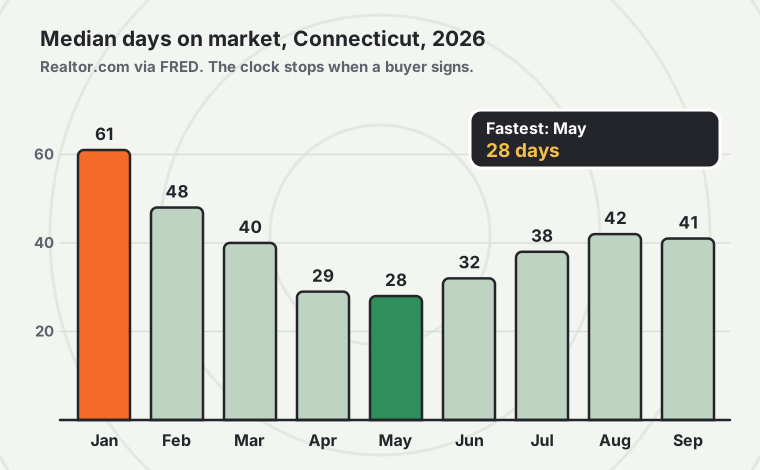
- Days on market swing with the season. Connecticut’s median was 28 to 29 days in April and May 2026, 41 in September 2026 and about 60 in January (Realtor.com).
- Selling by owner usually takes longer, mainly at the start: getting on the MLS, pricing without help and screening buyers yourself.
- A cash sale can close in about one to three weeks, because there is no mortgage commitment, no bank appraisal and no showings. The title search still has to be done.
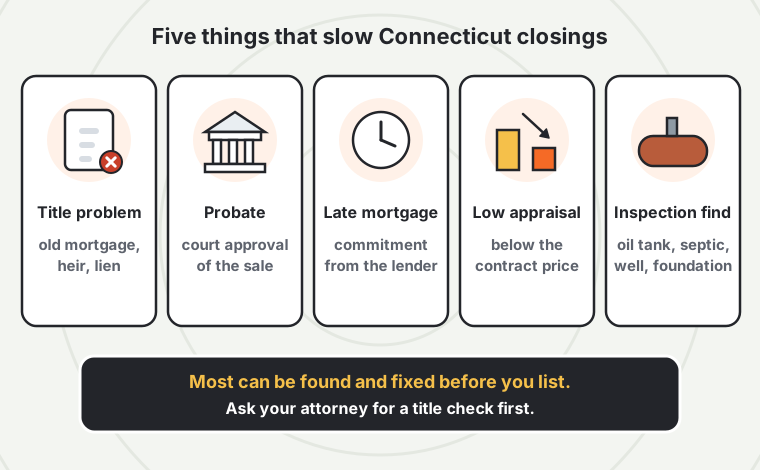
- What slows Connecticut closings is rarely the paperwork you know about. It is title surprises (old unreleased mortgages, missing heirs), probate court approval, a late mortgage commitment, a low appraisal and inspection findings such as buried oil tanks, septic problems and foundations.
- Probate, short sales and foreclosures run on someone else’s calendar. Plan for them separately.
“How long will it take?” is usually the second question every Connecticut seller asks, right after “how much will I get?”. This guide answers it as a clock, step by step, for each way of selling, with the Connecticut steps national guides skip. It is part of our guide on how to sell a house in Connecticut.
How long does it take to sell a house in Connecticut?
It takes about two to four months to sell a house in Connecticut with an agent: two to six weeks to prepare, a median of roughly 30 to 60 days on the market depending on the season, and 30 to 45 days from signed contract to closing with a mortgage buyer. A cash sale can close in one to three weeks. Probate, short sales and houses that need major repairs take longer.
Those numbers come from three parts of the sale, and each has its own clock:
- Prep (before the listing): hiring an attorney, pricing, repairs, the state disclosure forms and photos. You control most of this.
- On the market (listing to signed contract): the part the market controls. In Connecticut it ranged from about 28 days in the spring of 2026 to about 60 in January.
- Contract to closing: inspections, the bank appraisal, the buyer’s mortgage commitment, the title search and the closing itself. Lenders and attorneys control most of this.
Typical shapes, not promises. A well-priced, ready house in April can be under contract in a week. A house that is hard to finance can sit for months. The rest of this guide shows each clock in detail.
How many days are Connecticut houses on the market?
Connecticut houses are on the market for a median of about 30 to 60 days, depending on the month. Realtor.com’s Connecticut median days on market was 28 in May 2026, 41 in September 2026 and 61 in January 2026. Single-family homes in Greater Hartford moved faster: an average of 15 days on market for homes that closed in July 2026, according to the Greater Hartford Association of Realtors.
You will see different numbers in different places, and they are not contradictions. They measure different things:
| Source and measure | Area | Number | What it counts |
|---|---|---|---|
| Realtor.com, median days on market (via FRED) | Connecticut | 28 (May 2026), 41 (Sep 2026), 61 (Jan 2026) | How long active listings have been listed, all home types |
| Greater Hartford Association of Realtors, average days on market until sale | Greater Hartford, single-family | 15 days (July 2026), 21 days year to date | Days on market for single-family homes that closed through the MLS that month |
| Redfin, median days on market (published by Stacker) | Hartford / Norwich / Bridgeport / New Haven | 28 / 28 / 40 / 48 (May 2026) | Listing to pending, for homes that went under contract |
The key point: days on market stop when a buyer signs, not when you get paid. Add the contract-to-closing time to every days-on-market figure you see.
Days on market by month in Connecticut
| Month | 2025 | 2026 |
|---|---|---|
| January | 62 | 61 |
| February | 47 | 48 |
| March | 35 | 40 |
| April | 32 | 29 |
| May | 32 | 28 |
| June | 34 | 32 |
| July | 39 | 38 |
| August | 43 | 42 |
| September | 41 | 41 |
| October | 41 | n/a |
| November | 45 | n/a |
| December | 57 | n/a |
Spring is fastest, the holidays slowest. If the season matters to you, our guide to the best time to sell a house in Connecticut shows the state’s closings and prices month by month.
What is the step-by-step timeline to sell a Connecticut house with an agent?
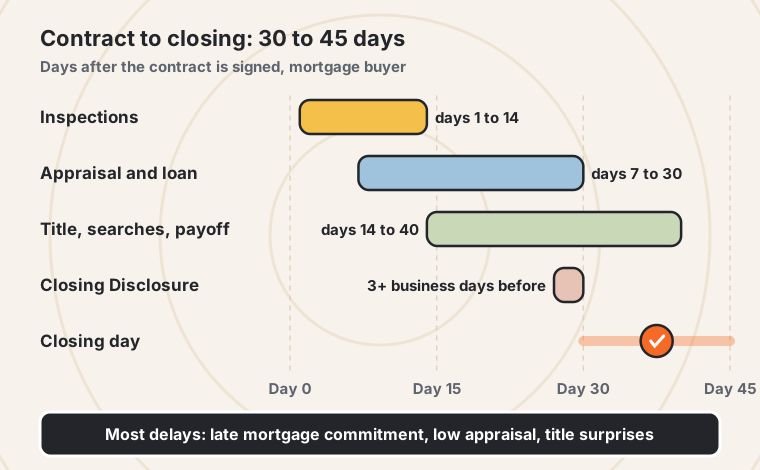
The step-by-step timeline to sell a Connecticut house with an agent runs about 60 to 120 days: one to six weeks of prep and paperwork, a few days to two months on the market, a few days to agree on terms, about a week or two for inspections, three to five weeks for the appraisal, mortgage commitment and title work, then the closing with both attorneys.
Days −42 to 0: prepare and price (1 to 6 weeks)
Choose an agent, agree on price from recent sales, clean and fix what inspectors and lenders flag, and book photos. Hire your Connecticut real estate attorney now; they can start on title and payoff questions before you have a buyer. Fill in the Residential Property Condition Report (the version in effect since July 1, 2025, which added a flood section); in crumbling-foundation towns, answer its foundation questions carefully. Add the federal lead paint disclosure for homes built before 1978.
Day 0 to about day 30: on the market
The listing goes on SmartMLS and the big portals. Most showings happen in the first two weeks. A well-priced house in spring often gets offers in the first week or two; Connecticut’s median days on market was 28 to 41 days between April and September 2026.
About 2 to 5 days: offer, counter-offer and signed agreement
You agree on price, deposit, contingencies and closing date. The buyer must receive the property condition report before signing (CGS 20-327b). In Connecticut the attorneys usually draft or review the purchase contract, which can take a few days.
Contract days 1 to 14: inspections
The buyer’s home inspection, often with radon, well water, septic, pest and oil tank checks. If the house was built before 1978, the buyer usually gets a 10-day window for a lead paint inspection under the federal rule. Expect a repair or credit request at the end.
Contract days 7 to 30: appraisal and mortgage commitment
The lender orders the appraisal and underwrites the loan. The contract sets a mortgage commitment date, commonly 30 to 45 days after signing (est.). If the buyer cannot get a commitment by that date, they can usually cancel and get their deposit back.
Contract days 14 to 40: title and municipal searches, payoff
The buyer’s attorney searches the land records at the town clerk and checks for unpaid taxes, water and sewer charges. Your attorney orders your mortgage payoff, prepares the deed and the conveyance tax return (Form OP-236), and works out the tax proration and the oil adjustment.
At least 3 business days before closing: the buyer’s Closing Disclosure
Federal rules require the lender to give the buyer the final Closing Disclosure at least three business days before closing. A late change to the loan can push the closing back.
Day of closing: sign, fund, record
Final walkthrough, then closing with both attorneys. You sign the deed, the conveyance tax return and the smoke and carbon monoxide affidavit (or credit the buyer $250, CGS 29-453). Funds are wired, your mortgage is paid off, the deed is recorded and your attorney sends you the balance.
| Stage | Fast case | Typical | Slow case | Who controls it |
|---|---|---|---|---|
| Prep before listing | 1 week | 2 to 4 weeks | 2 months+ (repairs, clean-out) | You |
| On the market | Days | About 30 to 45 days | 3 months+ (overpriced, winter, hard to finance) | The market and your price |
| Offer to signed contract | 1 to 2 days | 3 to 5 days | 2 weeks (multiple counters, attorney edits) | You and the buyer |
| Contract to closing | About 3 weeks | 30 to 45 days | 60 days+ (appraisal, title, probate) | Lender, attorneys, appraiser |
| Total | About 5 to 6 weeks | About 2 to 4 months | 6 months or more |
How long does it take to sell a house by owner in Connecticut?
Selling a house by owner in Connecticut usually takes a few weeks longer than with an agent, mostly before the contract: getting the listing onto SmartMLS through a flat-fee service, pricing without an agent’s market data, running showings and screening buyers yourself. Once a contract is signed, the 30 to 45 days to closing are the same, because the lender, appraiser and attorneys set that clock.
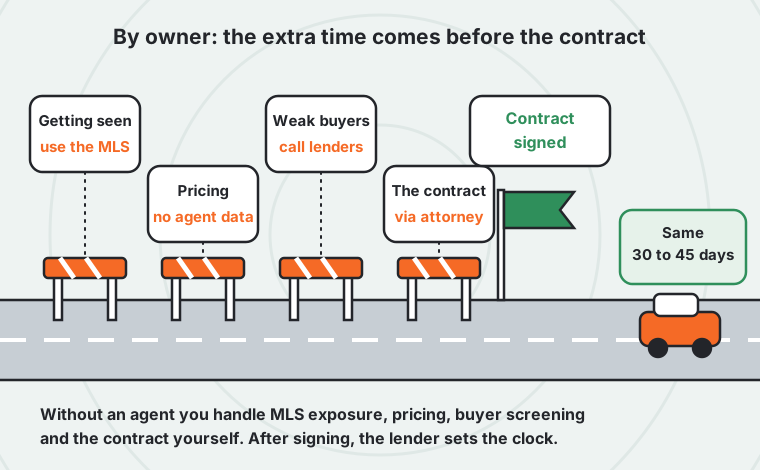
Where by-owner sales lose time:
- Getting seen. Without the MLS, most buyer agents never see your house. A flat-fee MLS listing fixes most of this.
- Pricing. An overpriced house sits, then sells after a price cut, which often takes longer than pricing right on day one.
- Weak buyers. Taking the house off the market for a buyer whose financing was never real can cost you a month or more. Call the lender on every pre-approval letter.
- The contract. Without an agent, your attorney drafts or reviews it. Hire the attorney before you list so this takes days, not weeks.
Every step, form and cost of a by-owner sale is in our guide to selling a house without an agent in Connecticut.
How long does a cash sale take in Connecticut?
A cash sale takes about one to three weeks in Connecticut, sometimes less. There is no mortgage commitment, no bank appraisal and no showings, so the clock is set by the title search, the municipal searches, your mortgage payoff and the attorneys’ schedules. If the house is in probate or the title has a problem, those steps still apply.
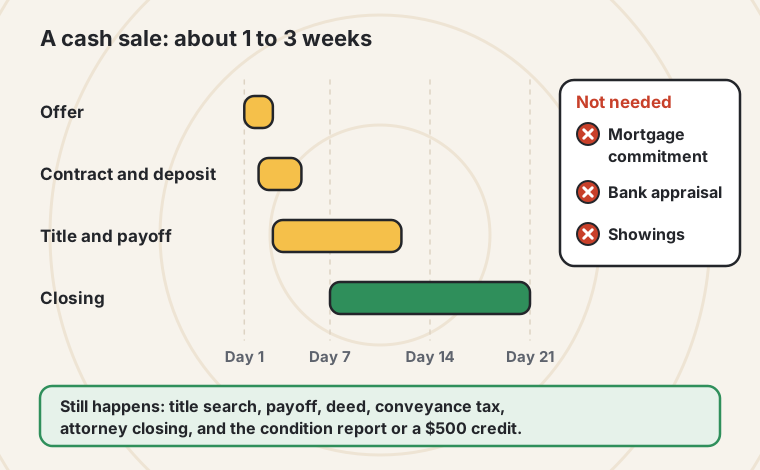
Day 1 to 3: the offer
The buyer sees the house once (or works from photos and a walkthrough) and makes a written offer. You compare it with your other options. A legitimate buyer gives you time to decide and to talk to an attorney.
Day 2 to 5: the contract and deposit
The attorneys prepare the contract. The buyer’s deposit goes into an attorney’s escrow account. You still give the property condition report before the buyer signs, or credit $500 at closing (CGS 20-327c).
Day 3 to 12: title and municipal searches, payoff
The buyer’s attorney searches title. Your attorney orders your payoff and prepares the deed and Form OP-236. This is the part that cannot be skipped, and it is where most “cash in 7 days” promises meet reality if there is an old lien or an estate issue.
Day 7 to 21: closing
You sign, the buyer wires the funds, the conveyance tax is paid and the deed is recorded. You can also choose a later date if you need time to move.
A cash sale is fast because the buyer takes on the repairs, the risk and the resale. That is why a cash offer is usually below what a move-in-ready house would bring on the open market. If your house is ready and you have three or four months, listing it will usually net you more. If repairs, carrying costs or a deadline would eat the difference, a cash sale can leave you ahead. Our cash buyer vs. realtor comparison shows the math.
How long does each way of selling take in Connecticut?
How long each way of selling takes in Connecticut depends on who controls the clock. A cash sale takes one to three weeks; a listing with an agent two to four months; a by-owner sale a little longer; a probate sale often four to eight months from the death; a short sale several months because the lender must approve it; and a sale during foreclosure must close before the Law Day the court sets.
| Route | Typical total time (est.) | Who controls the clock | What usually slows it |
|---|---|---|---|
| Cash buyer | 1 to 3 weeks | Attorneys, title search | Title defects, liens, probate not yet opened |
| Listing agent, mortgage buyer | 2 to 4 months | The market, the buyer’s lender | Price, season, appraisal, mortgage commitment |
| By owner (FSBO) | 2 to 5 months | You, the market, the lender | Exposure, pricing, unverified buyers |
| Flat-fee MLS listing | 2 to 4 months | You, the market, the lender | Same as by owner, with better exposure |
| Probate sale (executor or administrator) | Often 4 to 8 months from the death | Probate Court, heirs | Opening the estate, court approval of the sale, heirs who disagree |
| Short sale | 3 to 6 months or more | Your lender | Lender approval of the price, second mortgages |
| Sale during foreclosure | Must close before Law Day | The court, your lender | Starting too late; payoff and reinstatement figures |
| Tenant-occupied house | Longer to list; cash sales similar | Lease terms, tenants | Showings, a buyer who wants the house empty |
Probate sales
Before anyone can sell a house that was in a deceased person’s name alone, the Probate Court must appoint an executor or administrator. Depending on the will and the court, the fiduciary may then need the court to authorize the sale: under CGS 45a-164 the court acts on a written application, after notice and a hearing, if the sale is in the best interests of the parties. You can usually market the house and sign a contract while the estate is open, with the contract subject to court approval. See our guide to selling an inherited house in Connecticut.
Short sales
If you owe more than the house will sell for, the lender must agree to accept less. That approval often takes weeks to months and can include counter-offers from the lender. Many buyers lose patience. Start early and get the lender’s short sale package before you list.
Foreclosure
Connecticut mostly uses strict foreclosure. After a judgment, the court sets a Law Day; if the debt is not paid by then, title passes to the lender. You can sell the house until that date, but the sale has to close in time to pay the lender off. The court’s foreclosure mediation program for owner-occupied homes can create time, but do not count on it as your only plan. See selling a house in foreclosure in Connecticut.
What slows down a closing in Connecticut?
What slows down a closing in Connecticut is usually one of five things: a title problem (an old mortgage never released, a missing signature, an heir, a lien), probate court approval, a buyer’s mortgage commitment that comes late, an appraisal below the price, or an inspection finding such as a buried oil tank, a failed septic, a well test or a foundation concern. Most can be found and fixed before you list.
Title problems
The buyer’s attorney searches the land records at the town clerk’s office. Common Connecticut findings:
- A paid-off mortgage that was never released. Lenders must release a paid mortgage, and Connecticut law lets an attorney or title company record an affidavit when the release does not arrive within 60 days of payoff (CGS 49-8a). Finding one at the last minute can still cost days or weeks.
- A missing owner. A spouse, an ex-spouse, a co-owner or a deceased owner whose estate was never probated. Everyone on title, or their estate, must sign.
- Liens and judgments. Unpaid property tax, water or sewer charges, contractor liens, judgment liens. They must be paid or released at closing.
- Open permits and unpermitted work. Not strictly title, but buyers’ attorneys and lenders ask, and closing a permit with the town building department can take weeks.
Probate
If the owner died, nothing can close until a fiduciary is appointed and has authority to sell. If the court must approve the sale, the application, notice and hearing add time (CGS 45a-164). Start with the Probate Court for the town where the person lived.
The mortgage commitment
Most Connecticut purchase contracts give the buyer a date to obtain a written mortgage commitment. Underwriters ask for more documents, an appraisal comes back with conditions, or the buyer’s job or credit changes. Each one can push the date. A pre-approval letter that you verified with the lender before you signed is the best protection you have.
The appraisal
If the bank’s appraiser values the house below the contract price, the lender lends less. The buyer may ask you to cut the price, bring more cash, or walk away under the contract. FHA and VA contracts include clauses that let the buyer walk away without losing the deposit if the appraisal comes in low. Pricing from real recent sales is the best defense. Our guide on how appraisals affect your selling price explains the options.
Inspection findings that are common in Connecticut
- Underground oil tanks. Connecticut’s Department of Energy and Environmental Protection sets no removal deadline for a residential heating oil tank, but a leaking tank must be emptied and removed promptly, and many buyers, lenders and insurers want an old buried tank out before closing. Removal needs a trained contractor and often a town permit.
- Septic systems. A failed septic test or an undersized system can mean repairs that need the local health district’s approval.
- Private wells. Water tests can take a week or more for lab results; a failed test may need treatment.
- Radon. A high test result usually leads to a mitigation system or a credit.
- Foundations. In towns on the state’s crumbling-foundation list, sellers answer the condition report’s foundation questions, and buyers and lenders may want a core test. See selling a house with a crumbling foundation in Connecticut.
Details on each one are in our guide to oil tanks, septic, wells and radon when selling a house in Connecticut.
Check these before you list
- Get a mortgage payoff estimate and confirm every past mortgage on your deed was released
- Check that everyone on the deed is alive, reachable and willing to sign
- If an owner died, open the estate at the Probate Court before you list
- Ask the tax collector and the water and sewer authority for your current balances
- Ask the building department whether any permits are still open
- Find out whether there is (or was) an underground oil tank, and get the removal paperwork if it was removed
- Pump the septic and keep the report; test the well water if you have one
- Test for radon
- Check whether your town is on the state’s foundation list and complete the foundation report if it is
- Complete the Residential Property Condition Report before any buyer signs
- Install working smoke and carbon monoxide detectors for the closing affidavit
- Hire your Connecticut real estate attorney and send them your deed and payoff information

When a Connecticut closing slips, it is almost never the paperwork everyone planned for. It is the thing nobody looked for: a 1990s mortgage that was paid off but never released, a brother on the deed who moved to Florida, a tank in the backyard nobody mentioned. Ask your attorney to run a title check before you list, not after you have a buyer. It costs little and it is the cheapest time you will ever buy.
How can you sell a house faster in Connecticut?
To sell a house faster in Connecticut, price it from the newest closed sales near you, list in spring if you can, fix what inspectors and lenders flag before you list, hire your attorney early to clear title, make showings easy, and choose the offer most likely to close, not only the highest. If speed matters more than price, a cash sale removes the market and the lender from the clock.
- Price right on day one. The first two weeks bring the most showings. A house priced above recent sales loses them, then sells later after a cut.
- Clear title before you list. Your attorney can find old mortgages, liens and estate issues while you prepare.
- Do the Connecticut inspections first. Septic, radon, oil tank and well. Surprises found by the buyer cost more time than ones you found yourself.
- Have the paperwork ready. The condition report, the lead paint disclosure, the foundation report if required, receipts for major work.
- Make access easy. A lockbox, flexible showing times and a clean, empty-looking house.
- Pick the strongest buyer. A bigger down payment, a verified pre-approval, a short mortgage contingency and an appraisal gap clause all shorten the risk window. See how to compare offers on a house in Connecticut.
- Agree on a realistic closing date. 30 to 45 days for a mortgage buyer is normal. Pushing for 21 days with a lender that cannot meet it only creates extensions.
If your house has been on the market for a while without offers, our guide why won’t my house sell? walks through the causes and fixes.
How long would your house take?
Get a free Home Forecast: your likely sale price from recent sales near you, how long each route would take in your town, and what you would walk away with either way. No calls unless you ask.
Know where you stand,
on your own time.
Watch what homes around you sell for and how fast, so when you are ready, you already know your options.
Follow your numbers as the market moves, and decide when the timing is right.
Can you sell a house in Connecticut in 7 days?
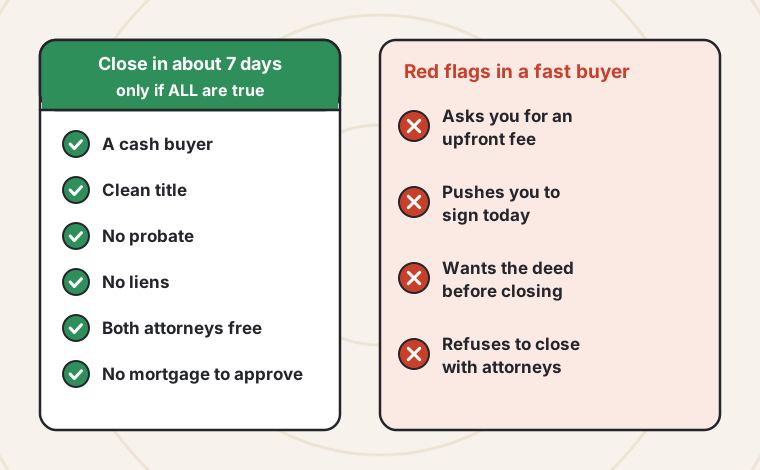
You can sell a house in Connecticut in about 7 days only with a cash buyer and a clean title: no mortgage to approve, no appraisal, no probate, no liens and both attorneys available. Seven to fourteen days is realistic for a simple cash sale. A sale with a mortgage buyer almost never closes that fast, because of the appraisal, underwriting and the three-business-day Closing Disclosure rule.
A fast cash closing still includes the steps that protect you: a written contract, a deposit held by an attorney, a title search, your mortgage payoff, the conveyance tax return and the deed. If a buyer suggests skipping your own attorney, or asks you to sign over the deed before you are paid, stop.
Asking you for an upfront fee, pressing you to sign today, asking you to deed the house to them before closing, or refusing to close with attorneys. A real buyer pays at a closing run by attorneys, where your mortgage is paid off and you receive your money. The Federal Trade Commission warns homeowners about foreclosure-rescue and mortgage relief scams.
If you want to see what a cash offer would look like before you decide anything, you can start with photos instead of a visit.
Get your cash offer
without anyone coming over.
Want your offer faster, or rather not talk to anyone yet? Send a few phone photos of each room. We price the repairs from them, line by line, and send your cash offer back, so you see a real number before you ever meet us or pick up the phone.
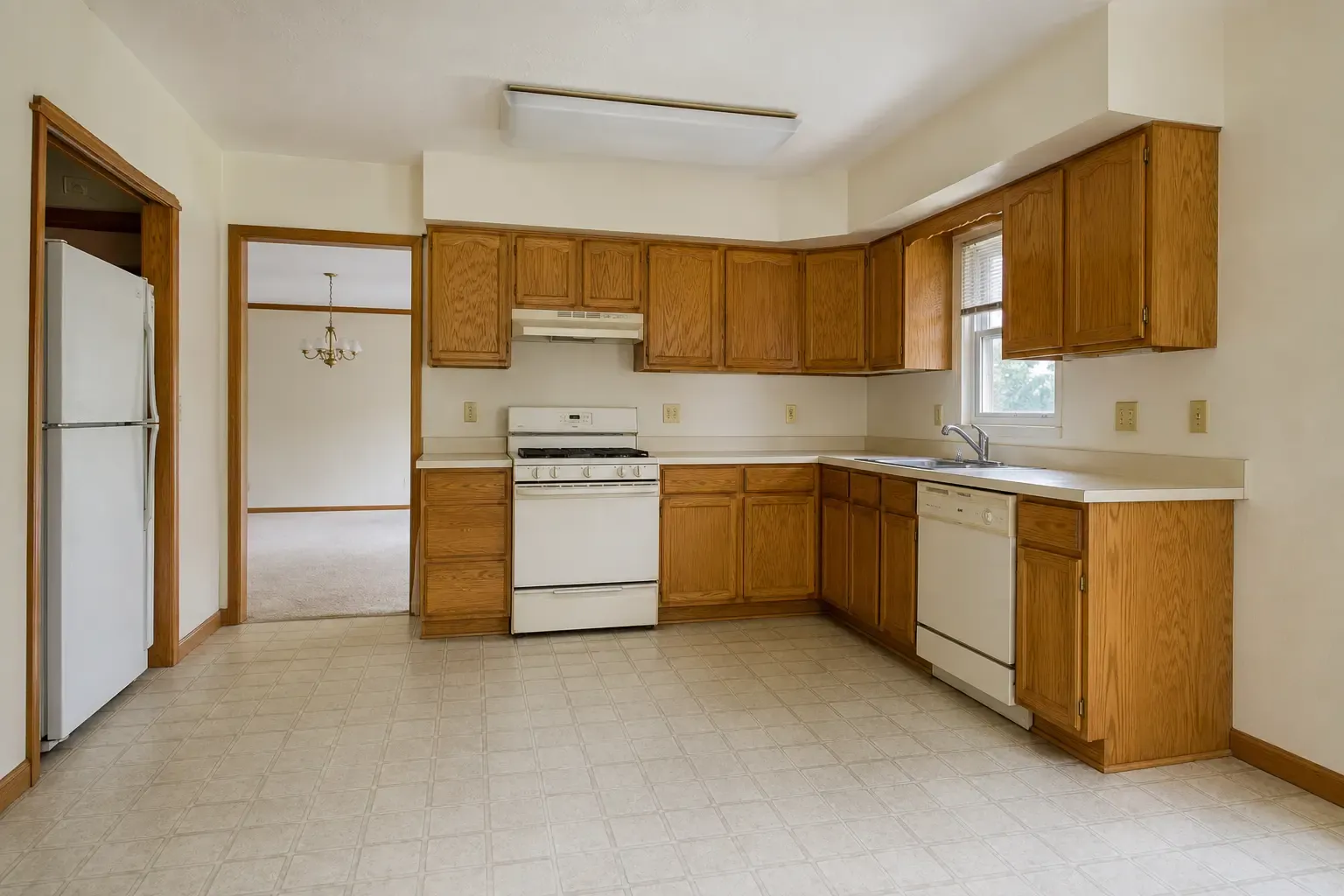 CabinetsFlooring
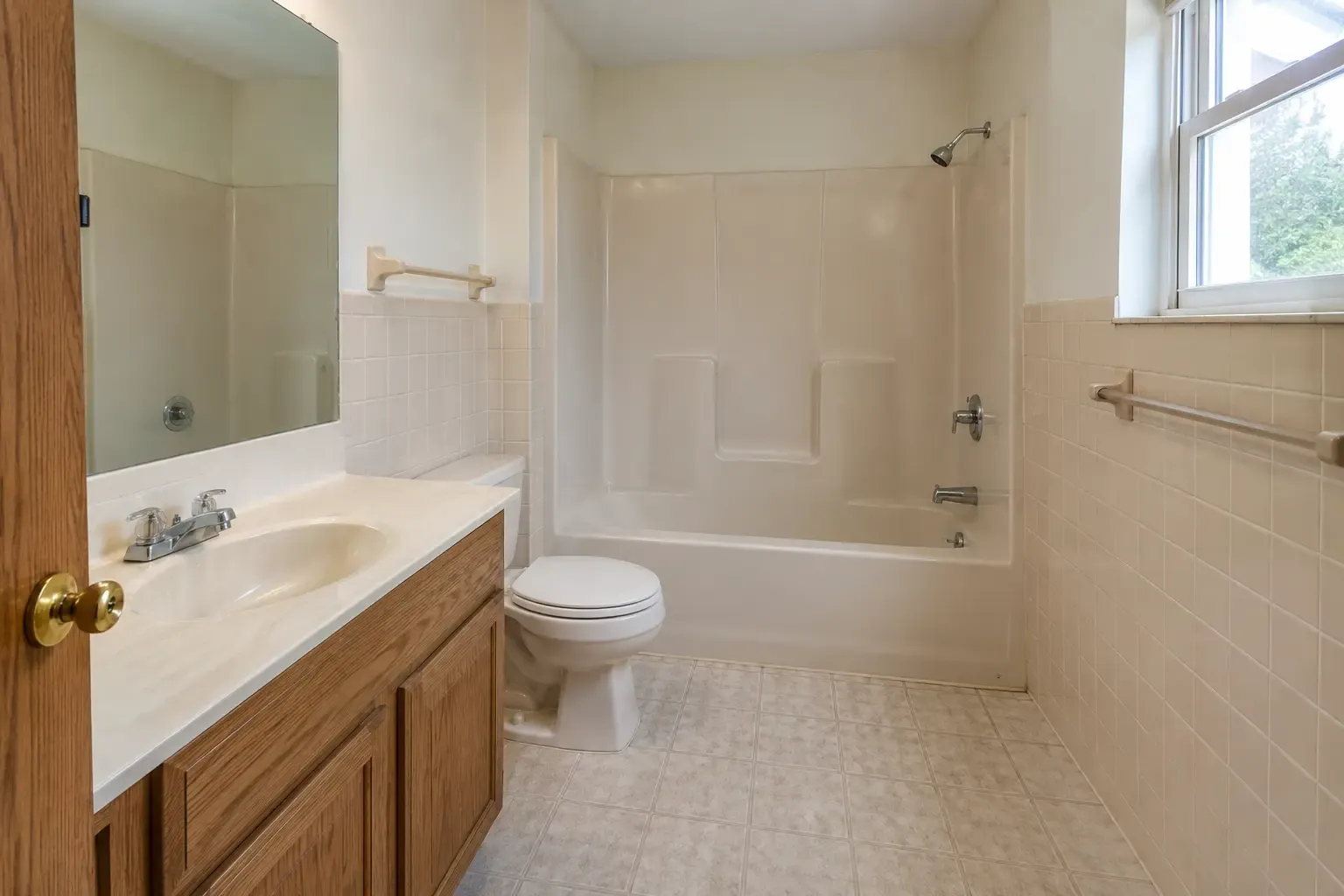 Tub & tile
 Floors
 Roof
We may bring in a partner buyer to close. Your price and terms don't change.
Questions Connecticut owners ask about how long it takes to sell
How long does it take to close on a house in Connecticut?
It takes about 30 to 45 days to close on a house in Connecticut with a mortgage buyer, counted from the signed contract. A cash sale can close in one to three weeks. Probate approval, title problems, a low appraisal or a late mortgage commitment can stretch the closing to 60 days or more.
What is the average time on market for a house in Connecticut?
The average time on market for a house in Connecticut ranges from about 30 to 60 days by season. Realtor.com’s Connecticut median was 28 days in May 2026 and 61 in January 2026. In Greater Hartford, single-family homes averaged 15 days on market for homes that closed in July 2026 (GHAR).
How long does a cash sale take in Connecticut?
A cash sale takes about one to three weeks in Connecticut. There is no mortgage commitment or bank appraisal, so the main steps are the contract, the title and municipal searches, your mortgage payoff and the closing with the attorneys. A clean title and no probate keep it fast.
How long does it take to sell a house in probate in Connecticut?
Selling a house in probate in Connecticut often takes four to eight months from the death (est.): weeks to open the estate and appoint a fiduciary, then marketing, then court approval of the sale where the will or the court requires it (CGS 45a-164), then closing. Disagreements among heirs add more time.
How long does a home inspection take in Connecticut?
A home inspection in Connecticut takes a few hours on site, and the buyer’s inspection period in the contract is usually one to two weeks. Well water and radon tests can take several days for lab results, and a septic inspection may need its own appointment.
What is a mortgage commitment date in Connecticut?
A mortgage commitment date in Connecticut is the date in the purchase contract by which the buyer must obtain a written loan commitment from the lender, commonly about 30 to 45 days after signing (est.). If the buyer does not get one in time, they can usually cancel and recover the deposit.
Can a closing be delayed in Connecticut?
Yes, a closing can be delayed in Connecticut. The usual reasons are a late mortgage commitment, a low appraisal, a title problem such as an unreleased mortgage or a missing heir, probate court approval, or inspection repairs. Delays need a written extension agreed by both sides through the attorneys.
Do I need an attorney to close in Connecticut, and does it slow things down?
In practice you need an attorney to close in Connecticut, because closings are run by attorneys and the buyer’s lender requires one. Hiring yours before you list speeds the sale up: title issues, payoff requests and the deed get handled while the house is on the market.
How long after closing do I get my money?
You usually get your money on the closing day or the next business day in Connecticut. After the buyer’s funds arrive and the documents are signed, your attorney pays off your mortgage and other charges and wires or hands you the balance.
How long does a short sale take in Connecticut?
A short sale in Connecticut often takes three to six months or more (est.), because your lender must review and approve the price. A second mortgage or a lien adds another approval. Ask your lender for its short sale package before you list.
How much time do I have to sell before a foreclosure in Connecticut?
In a Connecticut strict foreclosure you have until the Law Day the court sets after judgment to sell or pay off the loan. The earlier you start, the more options you have. Our foreclosure guide explains the steps, and the Judicial Branch’s mediation program can help eligible homeowners.
Does selling in winter take longer in Connecticut?
Yes, selling in winter usually takes longer in Connecticut. Median days on market was about 60 in January 2025 and 2026, about twice the spring figure. Snow-covered roofs and frozen-ground septic inspections can also slow the contract period.
Can I choose my closing date?
Yes, you can negotiate your closing date in Connecticut. Mortgage buyers usually need at least 30 days. Cash buyers can often close within a couple of weeks or wait several months if you need time to move. Put the date in the contract.
How long does it take to remove an underground oil tank before a sale?
Removing an underground oil tank before a sale in Connecticut typically takes one to three weeks (est.) to schedule a trained contractor, get any town permit, remove the tank and receive soil test results. A leak found during removal adds cleanup time.
How long does it take to sell a house that needs repairs?
A house that needs major repairs usually takes longer to sell in Connecticut, because many buyers’ lenders will not finance it until the work is done. You can fix it first, price it for a cash or renovation buyer, or sell it as-is directly for cash in one to three weeks.
Time is one side of the decision; money is the other. For the whole process, from pricing to the closing table, see our guide on how to sell a house in Connecticut, and estimate your costs with the Connecticut closing cost guide.
Related Connecticut guides
Plan your timeline
When it is not selling
Selling in a particular city? See our pages for Hartford, New Haven, Bridgeport, Norwich, Waterbury and West Hartford.
Sources
- Realtor.com, Median Days on Market in Connecticut, via FRED, Federal Reserve Bank of St. Louis (retrieved October 2026).
- Greater Hartford Association of Realtors, MLS statistics, July 2026 (single-family closed sales and days on market).
- Redfin data for Hartford, Norwich, Bridgeport and New Haven, May 2026, as published by Stacker.
- CGS § 20-327b and § 20-327c (property condition report; $500 credit) and the Department of Consumer Protection real estate page (reports effective July 1, 2025, under Public Act 25-33).
- CGS § 29-453 (smoke and carbon monoxide affidavit; $250 credit).
- CGS § 12-494 (conveyance tax) and DRS real estate forms (Form OP-236).
- CGS § 49-8 and § 49-8a (release of a paid mortgage; affidavit after 60 days).
- CGS § 45a-164 (Probate Court authorization to sell real property) and Connecticut Probate Courts.
- Connecticut Judicial Branch, foreclosure (strict foreclosure, Law Day and the foreclosure mediation program).
- Consumer Financial Protection Bureau, Regulation Z § 1026.19(f) (Closing Disclosure at least three business days before consummation).
- EPA and HUD Lead-Based Paint Disclosure Rule (homes built before 1978; buyer’s 10-day inspection opportunity).
- Connecticut DEEP, Residential Home Heating Oil Tanks FAQs (no removal deadline; leaking tanks must be removed promptly).
- HUD, FHA amendatory clause model document (buyer’s right to walk away after a low appraisal).
See the house together.
Pick a time that works.
Choose a time for us to walk through the property with you, or ask for a quick call first. We confirm every request personally.
Tuesday, January 13
No open times in the next few weeks. Please call us.
We will confirm by email. Nothing is booked until we do.
View my request
Who wrote this
Jerryll Noorden
Jerryll has bought and sold Connecticut houses since 2016 and has sat at more closing tables than he can count, on both sides. Before real estate he was a robotics scientist at NASA, IHMC and IIT. He wrote this guide because the national sites that rank for it skip the Connecticut rules that cost sellers money. When listing or selling it yourself would get you more than a cash offer, he says so.
This guide explains Connecticut rules in plain English. It is not legal or tax advice. Laws change; for your sale, talk to a Connecticut real estate attorney and a tax professional.
