
- Connecticut law does not make you repair anything before you sell. It makes you disclose what you know, and sign the smoke and carbon monoxide affidavit at closing or credit the buyer $250.
- Fix what a lender, insurer or inspector will flag and what is cheap: safety items, active leaks, broken heat, an old buried oil tank, high radon, peeling paint on a pre-1978 house.
- Credit what is big but certain: an aging roof, a septic field near the end of its life, well water treatment. A written quote turns a scary item into a number.
- Skip what buyers want to choose themselves: kitchens, baths, new windows, finished basements. They rarely pay back before a sale.
- Connecticut’s housing is old. In many cities most homes were built before 1960, so oil tanks, lead paint, old wiring and wet basements come up again and again. Plan for them.
- If the repair list is long, compare the net. Fixing and listing usually wins for a few thousand dollars of work. For a large or uncertain list, an as-is or cash sale can come out close once you count commission, carrying costs and the risk of a buyer walking.
Do you have to make repairs before selling a house in Connecticut?
No, you do not have to make repairs before selling a house in Connecticut. No state law requires a seller to fix anything. What Connecticut does require is that you disclose the problems you know about on the Residential Property Condition Report (or credit the buyer $500), sign a smoke and carbon monoxide affidavit at closing (or credit $250), and give the federal lead paint disclosure for homes built before 1978.
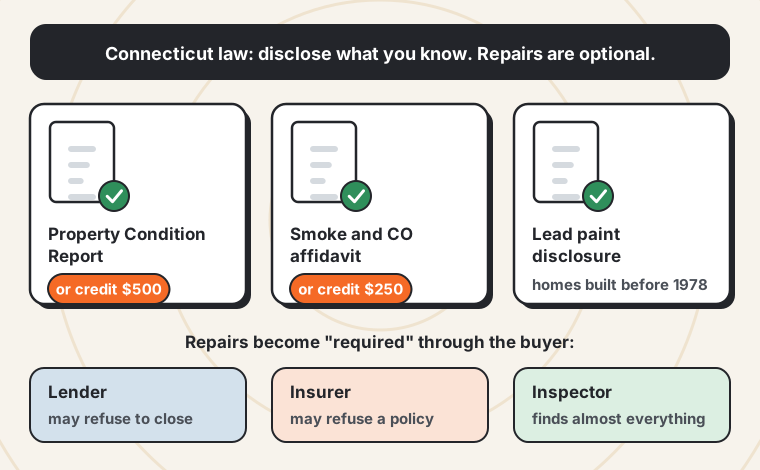
Repairs become “required” in a different way: through the buyer. A buyer’s lender may refuse to close until a safety or structural problem is fixed. A buyer’s insurer may refuse to write a policy on a house with a 40-year-old buried oil tank. And a buyer’s inspector will find almost everything. So the real question is not “must I fix it” but “what will it cost me if I do not”. This guide answers that for every common Connecticut repair, with cost ranges (est.) and a fix, credit or skip call.
If you are just starting, our overview of how to sell a house in Connecticut puts repairs in context with pricing, the attorney and closing. For cheap cosmetic wins, see our companion list of 13 low-cost fixes that add the most value.
How do you decide what to fix before selling a house?
To decide what to fix before selling a house, run each item through three questions: will a lender, insurer or inspector flag it; is the fix cheap compared with the discount a buyer will take for it; and will buyers see it in photos or at the first showing? If the answer to any of the first two is yes, fix it. If it is expensive and certain, credit it. If it is a matter of taste, skip it.
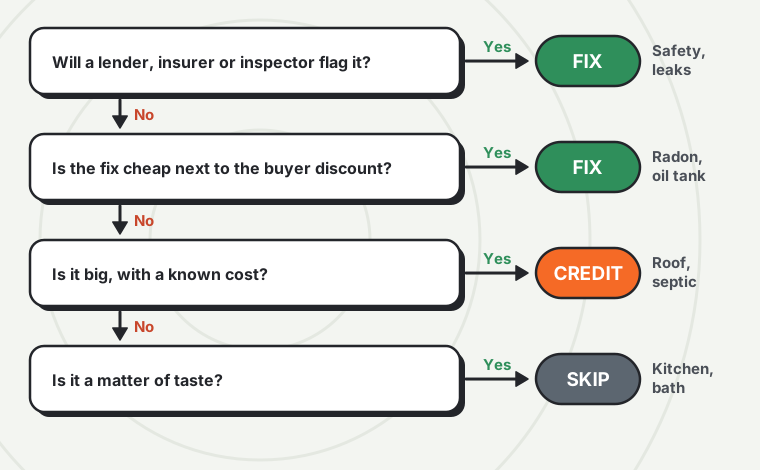
Fix
Small and scarycheap items that block loans or alarm buyers
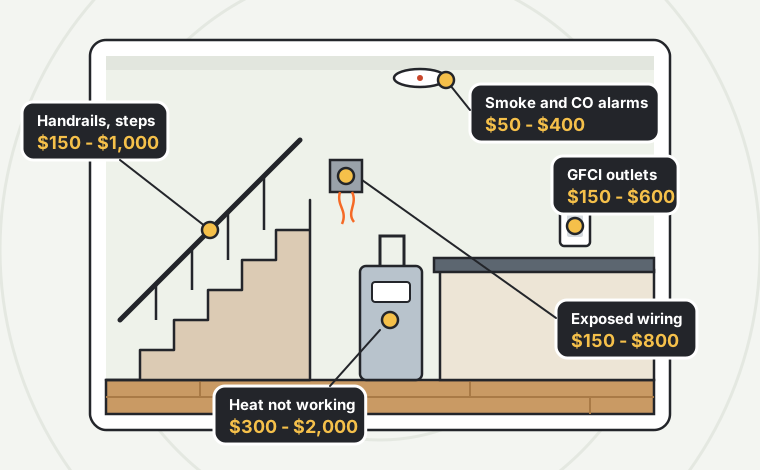
- Safety: smoke/CO alarms, exposed wiring, missing handrails
- Active leaks and water damage
- No heat or no hot water
- Old buried oil tank, high radon
- Peeling paint on a pre-1978 house
Credit
Big and certainknown costs with a written quote
- Roof near the end of its life
- Septic field or well treatment
- Old boiler or furnace that still works
- Electrical panel the buyer’s insurer dislikes
Skip
Taste and remodelsbuyers want to choose their own
- Kitchen and bath remodels
- New windows and siding
- Finishing the basement
- Big landscaping projects
Two Connecticut twists change the math. First, labor is expensive here, especially in Fairfield County, so a remodel that might break even in a cheaper state rarely does in Connecticut. Second, buyers’ inspections here routinely include radon, septic, well and oil tank checks, so the hidden items get found. Fixing a hidden item before listing is often worth more than fixing a visible cosmetic one.
What do lenders, insurers and inspectors flag on Connecticut houses?
Lenders, insurers and inspectors flag different things on Connecticut houses. Lenders and their appraisers flag safety, soundness and security: FHA rules, for example, call out roofs near the end of their life and peeling paint on pre-1978 homes. Insurers flag old electrical panels, roof age, wood stoves and underground oil tanks. Inspectors flag everything, and in Connecticut they add radon, septic, well and foundation checks.
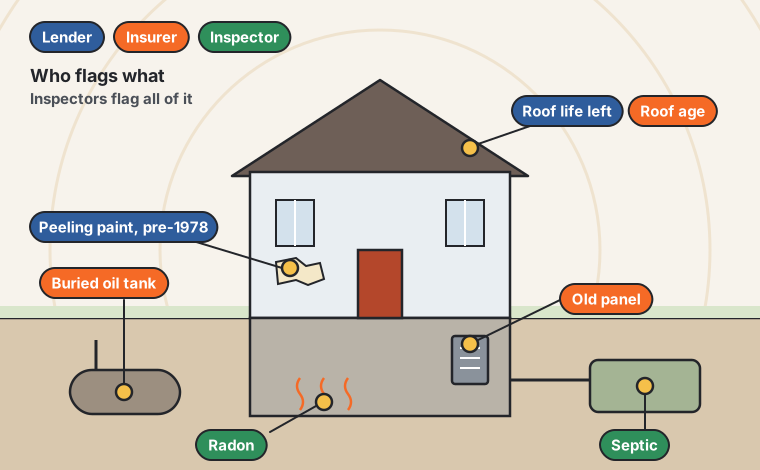
| Who | What they look for | What happens if they find it |
|---|---|---|
| FHA appraiser (FHA loans) | Safe, sound and secure; roof with about two years of life left; no defective (peeling, chipping) paint on homes built before 1978; working heat; no exposed wiring; safe access | The loan is conditioned on repair before closing. Seller often has to fix or the deal fails. |
| VA appraiser (VA loans) | Similar minimum property requirements | Repairs required before closing |
| Conventional appraiser | Overall condition rating; items that affect safety, soundness or structural integrity | Serious items must be repaired or the loan can stall; cosmetic items usually do not matter |
| Homeowners insurer | Roof age and condition; old fuse boxes, some older breaker panels and knob-and-tube wiring; underground oil tanks; wood or coal stoves; trampolines and pools | Higher premium, an inspection, or refusal to insure until fixed. No insurance means no mortgage. |
| Buyer’s home inspector | Everything, plus radon, septic, well water, oil tank, foundation, wet basement, chimney, attic ventilation and ice dams | A repair or credit request after the inspection; sometimes the buyer walks |
An FHA or VA buyer brings stricter appraisal rules. If your house has peeling paint, a tired roof or a missing handrail, a conventional or cash buyer may be the smoother match, or you fix those items before listing so any buyer can close.
What should you fix, credit or skip before selling a Connecticut house?
Before selling a Connecticut house, fix safety items, leaks, broken heat, high radon, an old buried oil tank and peeling paint on older homes; credit an aging roof, septic field, well treatment or old heating system; and skip remodels, new windows and finished basements. The table below gives a Connecticut cost range (est.) and a verdict for each common issue.
| Issue | Typical Connecticut cost (est.) | Who flags it | Verdict |
|---|---|---|---|
| Missing or dead smoke and CO alarms | $50 – $400 | Closing affidavit (CGS 29-453); inspectors | Fix. Otherwise a $250 credit and a bad first impression |
| Active roof, plumbing or window leak | $150 – $1,500 | Inspectors, appraisers | Fix, keep the receipt, disclose the fix |
| Exposed wiring, open junction boxes, missing outlet covers | $150 – $800 | FHA/VA appraisers, inspectors | Fix with a licensed electrician |
| Missing stair handrails, broken steps | $150 – $1,000 | FHA/VA appraisers, inspectors | Fix |
| No GFCI outlets in kitchen, baths, garage, exterior | $150 – $600 | Inspectors | Fix: cheap and always on the list |
| Heating system not working | $300 – $2,000 for a repair | Every lender | Fix. No heat means no closing in most loans |
| Old boiler or furnace that works (20+ years) | $6,000 – $15,000 to replace | Inspectors, sometimes insurers | Service it; credit or price in rather than replace |
| Water heater leaking or failed | $1,200 – $2,500 | Inspectors, lenders | Fix if failed; otherwise skip |
| Peeling paint on a pre-1978 house | $500 – $5,000 (lead-safe work) | FHA/VA appraisers; lead disclosure | Fix with a lead-safe certified contractor |
| Old underground oil tank, no known leak | $1,500 – $4,000 removal with soil test | Lenders, insurers, inspectors | Usually fix before listing |
| Radon at or above 4 pCi/L | $800 – $2,500 (DPH) | Inspectors | Fix: often cheaper than the credit asked |
| Septic overdue for pumping, broken cover or baffle | $350 – $2,500 | Septic inspectors | Fix |
| Septic leaching field failing | $15,000 – $40,000+ | Septic inspectors, health department | Credit or price in with a designer’s quote |
| Well water: bacteria | $200 – $2,000 (shock or UV) | Lender’s water test | Fix |
| Well water: arsenic, uranium or radon | $1,500 – $8,000 treatment | Extended water test | Credit is common |
| Fuse box, some older breaker panels, knob-and-tube wiring | $1,500 – $4,000 panel; $8,000 – $20,000+ rewire | Insurers, inspectors | Panel: often fix. Rewire: credit or price in |
| Roof with a few years left, not leaking | $10,000 – $25,000 to replace (asphalt) | Inspectors, insurers; FHA if under about 2 years | Credit or price in, unless FHA or insurer forces it |
| Wet basement, seepage | $300 – $2,000 (gutters, grading, dehumidifier); $5,000 – $15,000+ drainage system | Inspectors; disclosure question 39 | Fix the cheap causes; disclose; credit major drainage |
| Chimney needing repointing or a liner | $1,000 – $5,000 | Inspectors, insurers | Fix if it serves an oil or gas appliance; otherwise credit |
| Rot on trim, sills, deck boards | $300 – $3,000 | Inspectors | Fix small areas; credit structural deck work |
| Ice dam damage, poor attic ventilation | $500 – $3,000 | Inspectors | Fix leaks and stains; credit insulation work |
| Crumbling (pyrrhotite) foundation | $150,000 – $250,000+ replacement | Inspectors, engineers, appraisers | Do not fix yourself; use CFSIC or sell and disclose |
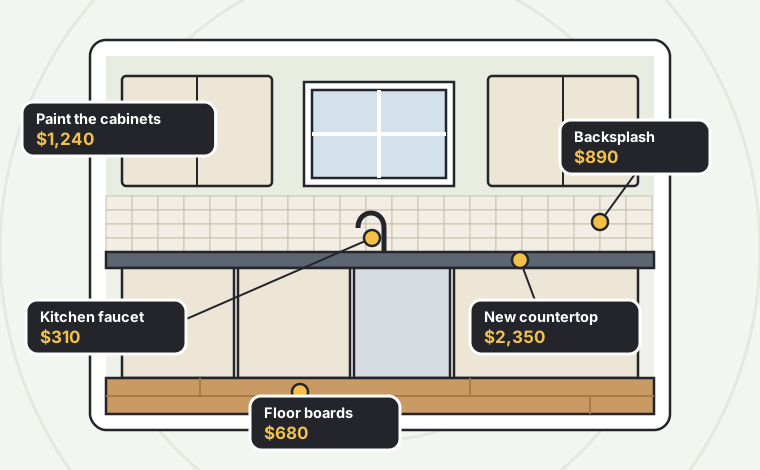
| Dated kitchen | $15,000 – $60,000+ | Buyers’ taste | Skip; paint, hardware and lighting at most |
| Dated bathroom | $10,000 – $30,000+ | Buyers’ taste | Skip; regrout, recaulk, new fixtures at most |
| Old windows that work | $700 – $1,500 per window installed | Buyers’ taste | Skip; fix broken glass and sash cords |
| Unfinished basement | $25,000 – $60,000+ to finish | Nobody requires it | Skip |
Not sure which of these your house needs, or what your contractor’s quote should be? Price the repairs first. It costs nothing and turns a vague worry into numbers you can decide with.
Which safety repairs should every Connecticut seller make?
Every Connecticut seller should make the cheap safety repairs: working smoke and carbon monoxide alarms (needed for the closing affidavit), covers on all outlets and junction boxes, GFCI outlets near water, secure handrails and steps, a serviced heating system with a working flue, no gas or oil smells, and no broken glass. These cost little, every inspector writes them up, and FHA and VA appraisers can hold up the loan over them.
- Smoke alarms on every level and near bedrooms; test each one
- Carbon monoxide alarms where there are fuel-burning appliances or an attached garage
- Cover plates on every outlet and switch; no open junction boxes
- GFCI outlets in the kitchen, baths, laundry, garage and outside
- Handrails on every staircase with four or more risers; fix loose treads
- Service the boiler or furnace; keep the receipt for the buyer
- Replace broken window glass and torn screens
- Secure loose deck boards and railings
- Remove or label any old fuel lines, gas stubs or abandoned oil lines
- Clear the path to the electrical panel, boiler, water heater and oil tank
At closing on a one- or two-family home or condo, Connecticut sellers sign an affidavit about the smoke and carbon monoxide detection equipment (CGS 29-453). If you do not provide it, you credit the buyer $250. A few new alarms cost less than that, and they show up in every listing photo of the ceiling.
Which repairs are specific to Connecticut houses?
The repairs specific to Connecticut houses are the ones tied to the state’s older, oil-heated, well-and-septic housing: underground oil tanks, radon, septic systems, private wells, lead paint in pre-1978 homes, ice dams on older roofs, wet stone and block basements, and crumbling concrete foundations in north-central and eastern towns. National repair guides rarely mention any of them, and they are what Connecticut inspections turn up most.
Old housing stock
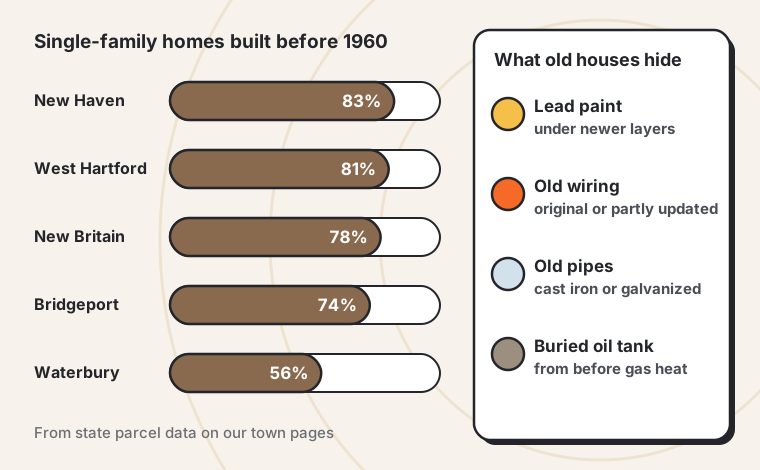
From state parcel data on our town pages: about 83% of single-family homes in New Haven were built before 1960 (median year 1930), 81% in West Hartford, 78% in New Britain, 74% in Bridgeport and 56% in Waterbury. Houses that age are likely to have lead paint under newer layers, original or partly updated wiring, cast iron or galvanized pipes, and sometimes a buried oil tank from before a switch to gas.
Oil tanks, septic, wells and radon
These four are routine in Connecticut inspections. In brief: remove an old buried tank with a soil test and keep the contractor’s letter; fix radon over 4 pCi/L; pump the septic if it is due and know your health department file; test the well before the buyer does. Our full guide to oil tanks, septic, wells and radon when selling in Connecticut covers each one, with costs and the rules.
Wet basements and ice dams
Connecticut winters bring ice dams on older, poorly ventilated roofs and spring water in stone and block basements. Before you spend on a drainage system, fix the cheap causes: clean gutters, add downspout extensions, regrade soil away from the foundation and run a dehumidifier. Then disclose honestly: question 39 of the condition report asks about seepage and dampness, and question 65 now asks about water penetration from seepage or floods.
Crumbling foundations
If your house was built in 1983 or later in towns such as Vernon, Manchester or Enfield, buyers will ask about pyrrhotite. Never pay for a replacement yourself before selling without checking the state’s repair program first. Our guide to selling a house with a crumbling foundation explains testing, the CFSIC program and your options.
Should you give the buyer a credit instead of making repairs?
You should give the buyer a credit instead of making repairs when the repair is large, the buyer would rather choose the contractor, or there is not enough time before closing. A credit (a seller concession at closing) or a price reduction lets the deal close on schedule and moves the work and the risk to the buyer. Repairs are better when a lender requires them before closing or when the fix is small and quick.
Three practical points:
- Credits and price cuts are not the same. A closing credit helps the buyer with cash at closing; a price cut lowers their loan. Lenders cap how much a seller can contribute toward a buyer’s costs, and the cap depends on the loan type and the down payment. Your attorney will structure it.
- Lender-required repairs cannot be credited away. If an FHA appraiser requires a handrail or paint, the work usually has to be done before closing.
- Get two written quotes. A buyer’s inspector’s guess is usually high. Your own quotes anchor the negotiation.
After the buyer’s inspection, expect a list. Our guide to comparing offers on a Connecticut house shows how to weigh credits and contingencies in the net.
What should you not fix before selling a house?
You should not fix things before selling a house that are expensive, a matter of taste, or that buyers will discount anyway: kitchen and bath remodels, replacing working windows or siding, finishing a basement, adding rooms, replacing a working but older roof or boiler, or replacing a crumbling foundation on your own. Spend instead on cleaning, paint, small repairs and the safety items that lenders and inspectors flag.
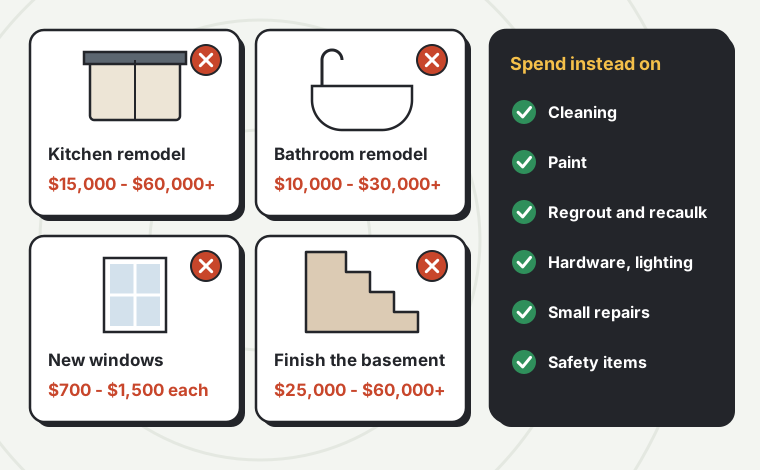
- Kitchen and bath remodels. Buyers want to pick their own finishes, and in Connecticut labor costs make it hard to get the money back before a sale. Clean, regrout, recaulk, paint and update hardware and lighting instead.
- New windows. Fix broken glass, sash cords and locks; skip full replacement.
- A working older roof. Unless it leaks, an insurer will not write it, or an FHA buyer’s appraiser calls it out, get a roofer’s written estimate of remaining life and let price reflect it.
- A working older boiler or furnace. Service it, keep the receipt, and disclose its age.
- Cosmetic items you love. Your taste is not the buyer’s. Neutral beats new.
- Anything that needs a permit you cannot finish before listing. A half-done permitted job is worse than none.
Our posts on upgrades to avoid and things to fix before you list go into more examples.
Should you get a pre-listing inspection in Connecticut?
You should get a pre-listing inspection in Connecticut if the house is older, you have not lived in it recently (an inherited or rental house), or you suspect a problem with the oil tank, septic, well, radon or foundation. It costs a few hundred dollars (est.), lets you fix or price problems before a buyer finds them, and reduces renegotiation. The trade-off: anything it finds, you now know and must disclose.
Worth it when…
- The house is 50+ years old
- It is an estate or rental you do not know well
- Well, septic or oil heat
- You want to sell to a financed buyer smoothly
Less useful when…
- You are selling as-is for cash anyway
- The house is newer and well maintained
- You already know the issues and have quotes
Remember the disclosure rule: Connecticut answers are based on your actual knowledge (CGS 20-327e). A pre-listing inspection adds to that knowledge. That is a good thing if you act on it: an honest report with the problems priced is far easier to sell than a surprise. Our guide to the Connecticut property condition disclosure explains how to report what you find.
What about open permits and unpermitted work?
Open permits and unpermitted work can delay a Connecticut sale, because buyers’ attorneys, lenders and title insurers may ask about them and the disclosure report tells buyers to check permits and certificates of occupancy with the town building official. Check your town’s building department file early. Close out open permits with a final inspection, and for unpermitted work either get it permitted after the fact or disclose it and price it in.
- Visit or call the building department and ask for the permit history of your address.
- Look for open permits with no final inspection, especially for roofs, decks, additions, finished basements, electrical work and water heaters.
- For work done without a permit, ask the building official what it takes to legalize it. Sometimes it is an inspection and a fee; sometimes walls must be opened.
- If you cannot or will not legalize it, disclose it. A buyer who finds an unpermitted bedroom in the basement after closing has a claim; one who knew before has a price.
Our post on selling a house with code violations covers the harder cases.
How do you hire contractors for pre-sale repairs in Connecticut?
To hire contractors for pre-sale repairs in Connecticut, use a contractor registered with the Department of Consumer Protection as a home improvement contractor, get a written contract with the price, scope and start and finish dates, pull permits where required, use licensed electricians and plumbers for that work, and for homes built before 1978 use an EPA lead-safe certified firm for anything that disturbs paint.
- Check the contractor’s home improvement registration on the DCP license lookup
- Electricians and plumbers: check their trade license too
- Get at least two written, itemized quotes
- Written contract signed by both of you, with a start and finish date
- Permit pulled by the contractor where the town requires one
- Lead-safe (EPA RRP) certification for painting or demolition in pre-1978 homes
- Pay in stages; final payment after the work and any inspection
- Keep every invoice and permit for the buyer
In a home built before 1978, scraping or sanding painted surfaces can spread lead dust. Federal rules require contractors who disturb paint in pre-1978 homes to be lead-safe certified and follow work practices. If you do it yourself, wet-scrape, contain the dust and clean up carefully; keep children and pregnant family members away.
When is it better to sell as-is than to fix the house?
It is better to sell as-is than to fix the house when the repairs are large or uncertain, when you do not have the cash or time to manage them, when a lender would block most buyers anyway, or when carrying the house for months costs more than the gap between a fixed-up price and an as-is price. For a house that needs only a few thousand dollars of work, fixing and listing usually wins.
A worked example (illustrative)
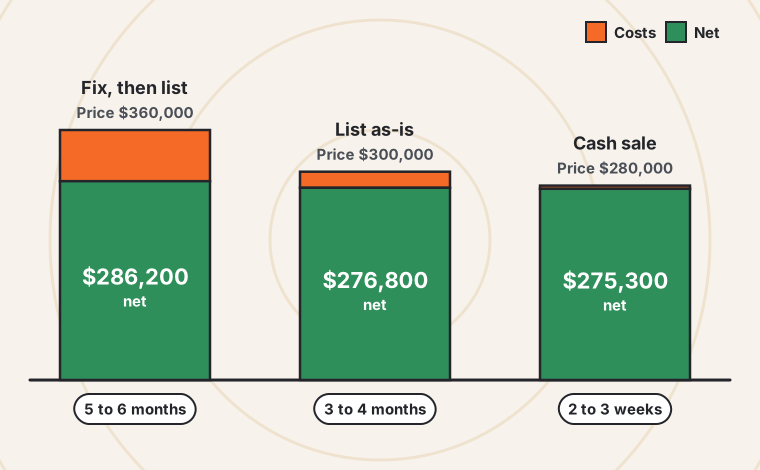
Say your house would sell for $360,000 in good condition, in a town with the standard 0.25% town conveyance tax, and it needs $45,000 of work: a roof, an oil tank removal, radon mitigation, paint, electrical updates and cleanup.
| Fix, then list | List as-is | Cash sale (example) | |
|---|---|---|---|
| Sale price | $360,000 | $300,000 (buyers subtract repairs plus a margin) | $280,000 |
| Repairs | $45,000 (and 2 to 3 months) | $0 | $0 |
| Commissions (about 5%, est.) | $18,000 | $15,000 | $0 |
| Conveyance tax (1.0%) | $3,600 | $3,000 | $2,800 |
| Attorney (est.) | $1,200 | $1,200 | $1,200 |
| Carrying costs (taxes, insurance, utilities, est.) | $6,000 (5 to 6 months) | $4,000 (3 to 4 months) | $700 (2 to 3 weeks) |
| Net before mortgage payoff | $286,200 | $276,800 | $275,300 |
| Risk | Cost overruns; new issues found during work | Financed buyers may fail on the roof or tank | Fixed price and date |
In this example, fixing and listing nets about $10,000 more, if the repairs come in on budget and the house sells at the full price. That is real money, and if you have the cash, the time and the stomach for contractors, it is the better choice. The as-is and cash routes give up some of that for speed and certainty. If your repair list were $15,000 instead of $45,000, the gap would widen in favor of fixing. If it were $80,000 with a septic replacement, it would likely close or flip. Run your own numbers in the calculator.
How much would you walk away with?
Slide the numbers to match your house. It works in your browser; nothing is saved or sent.
Estimates for planning. Conveyance tax per CGS 12-494 (state 0.75% up to $800,000, 1.25% to $2.5M, 2.25% above, plus the town rate). Seller attorney about $1,200 to $1,500; flat-fee MLS about $400; listings include three months of taxes, insurance and utilities, a cash sale about two weeks. Your attorney gives you the final numbers.

The most expensive pre-sale repairs I see are the ones that were never needed: a new kitchen in a house whose buyers cared about the oil tank and the roof. Price the boring items first, the ones lenders and inspectors care about. If those are small, fix them and list. If they are big, get a written as-is number before you spend a dollar, so you know what the repairs actually have to beat.
See what your house is worth as it stands
Send the address and a few photos. We will price the repairs we see and give you an as-is cash number you can set against the fix-and-list route. No visit needed to start, and no pressure either way.
Get your cash offer
without anyone coming over.
Want your offer faster, or rather not talk to anyone yet? Send a few phone photos of each room. We price the repairs from them, line by line, and send your cash offer back, so you see a real number before you ever meet us or pick up the phone.
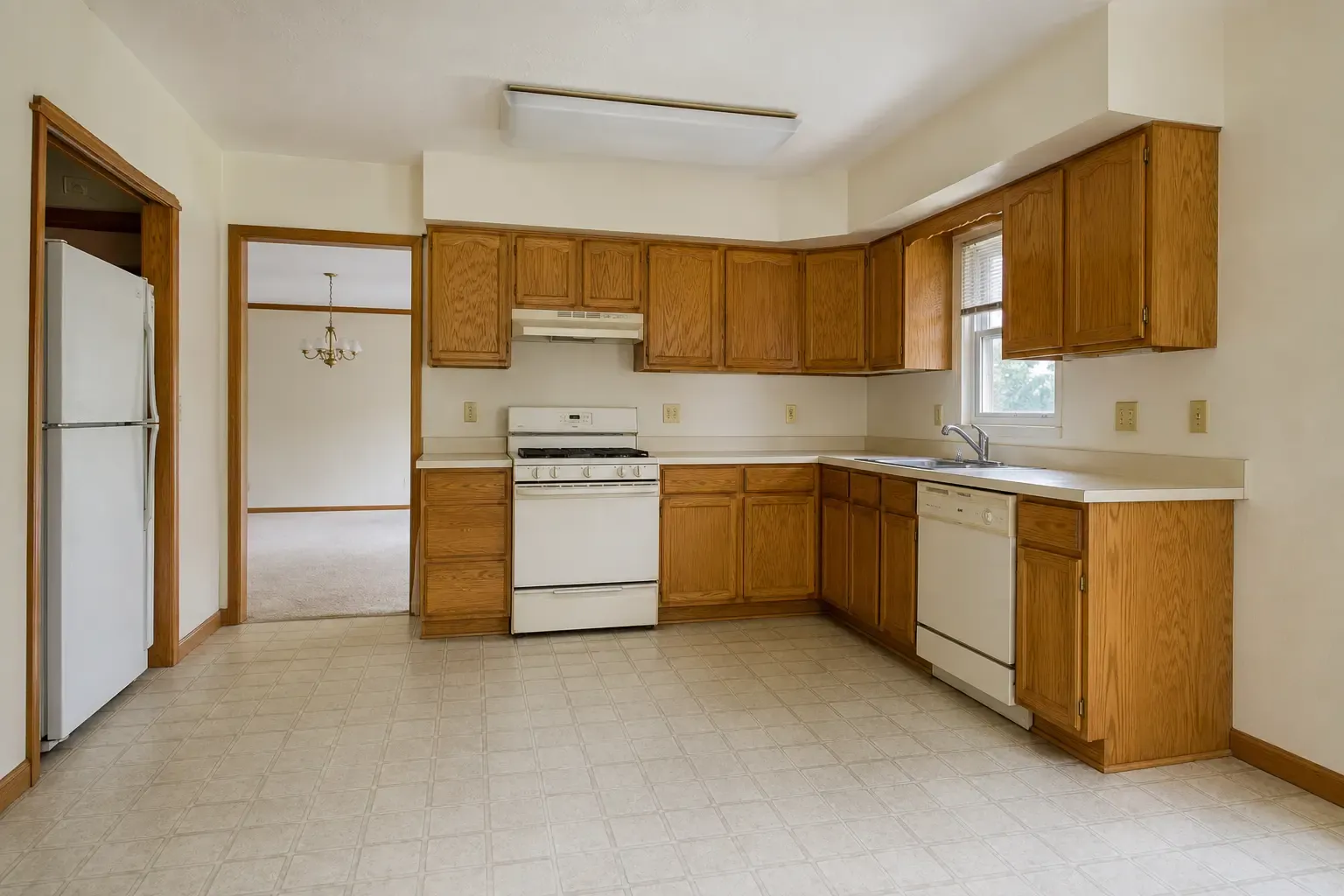 CabinetsFlooring
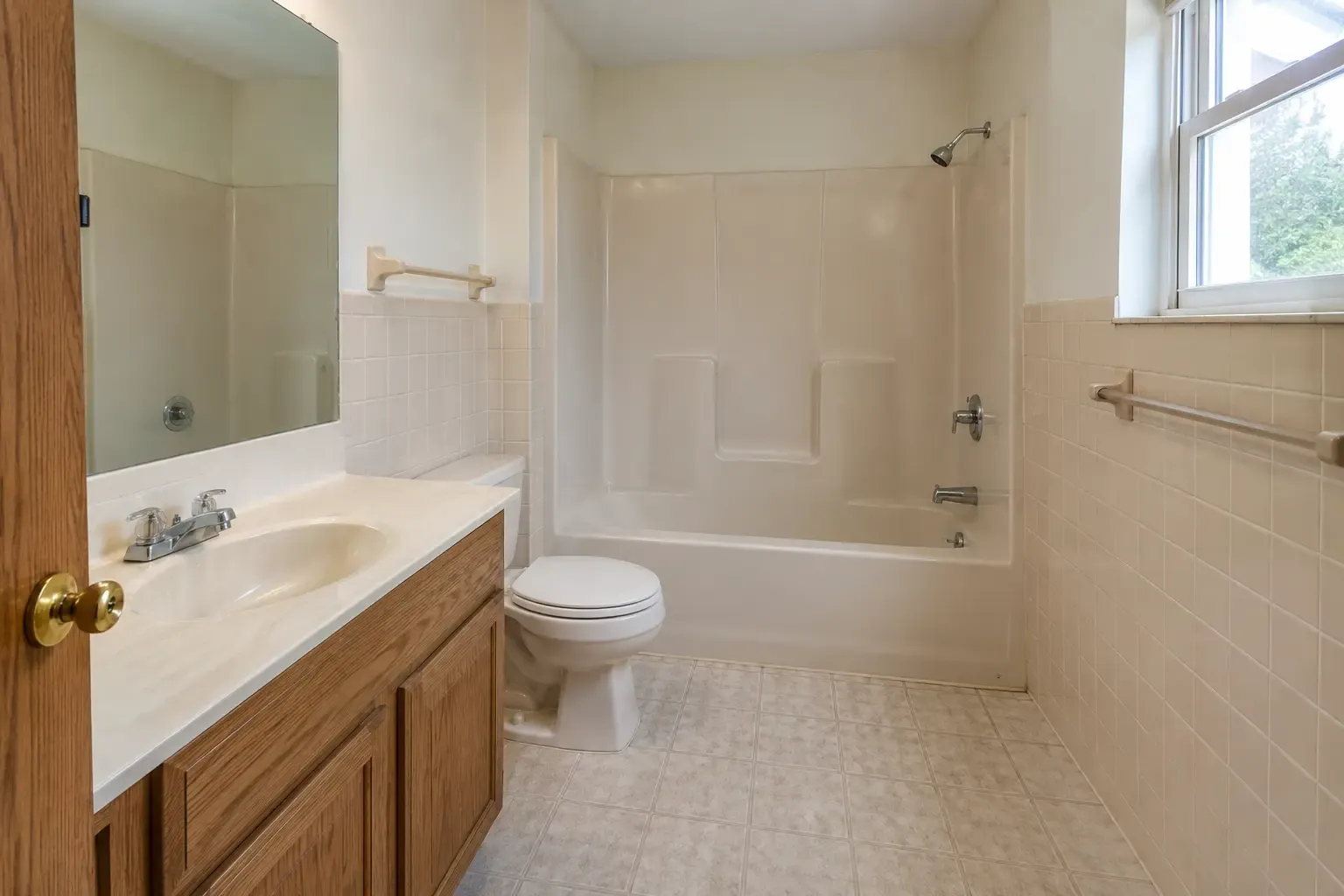 Tub & tile
 Floors
 Roof
We may bring in a partner buyer to close. Your price and terms don't change.
Questions about repairs before selling in Connecticut
What repairs are mandatory when selling a house in Connecticut?
No repairs are mandatory when selling a house in Connecticut. State law requires disclosure, not repair. In practice, working smoke and CO alarms are needed for the closing affidavit (or a $250 credit), and a buyer’s lender may require safety or structural repairs before it will fund the loan.
What should I fix first before selling my house?
Before selling your house, fix first the cheap items that lenders, insurers and inspectors flag: smoke and CO alarms, leaks, exposed wiring, handrails, broken heat, high radon, an old buried oil tank and peeling paint on a pre-1978 house. Then clean, declutter and paint.
Is it worth replacing the roof before selling?
Replacing the roof before selling is usually not worth it unless the roof leaks, an insurer will not cover it, or a buyer’s FHA or VA appraiser requires it. Get a roofer’s written estimate of remaining life and let the price or a credit reflect it.
Should I remodel the kitchen before selling?
No, you usually should not remodel the kitchen before selling. A full remodel costs $15,000 to $60,000 or more in Connecticut (est.) and rarely pays back before a sale. Clean, paint, update hardware and lighting, and fix anything broken instead.
Do I have to fix things the buyer’s inspector finds?
No, you do not have to fix things the buyer’s inspector finds. You can repair, offer a credit or price reduction, or decline. The buyer can then accept, negotiate or, if the contract allows, walk away. Lender-required repairs must usually be done before closing.
Can I sell my house as-is in Connecticut?
Yes, you can sell your house as-is in Connecticut. As-is means you will not make repairs; you still must give the property condition report (or a $500 credit), the lead paint disclosure for pre-1978 homes, and the smoke and CO affidavit at closing.
Should I remove my underground oil tank before selling?
You should usually remove an old underground oil tank before selling in Connecticut. No law requires it, but lenders and insurers often do. Removal with a soil test typically costs $1,500 to $4,000 when there is no leak (est.), and the contractor’s letter becomes proof for the buyer.
Should I fix high radon before I sell?
Yes, you should usually fix high radon before you sell in Connecticut. A mitigation system typically costs $800 to $2,500 according to the Department of Public Health, often less than the credit a buyer asks for, and a post-mitigation test settles the question.
Is a pre-listing inspection worth it in Connecticut?
A pre-listing inspection is worth it in Connecticut for older homes, estates and rentals, and homes with oil heat, septic or a well. It costs a few hundred dollars (est.) and reduces renegotiation. Anything it finds must be disclosed.
What do FHA appraisers require sellers to fix?
FHA appraisers require sellers to fix conditions that make a house unsafe, unsound or insecure, such as peeling paint on homes built before 1978, a roof near the end of its life, exposed wiring, missing handrails or no working heat. The repairs usually must be done before closing.
How much should I spend on repairs before selling?
How much you should spend on repairs before selling depends on the house, but most sellers do best spending on safety, leaks, the items lenders flag and a deep clean and paint, often a few thousand dollars. Compare any large repair against a written as-is offer before you start.
Do I need permits for repairs before selling?
You need permits for many repairs before selling in Connecticut, such as roofs, electrical work, decks, structural changes and some plumbing. Your contractor usually pulls them. Painting, cleaning and small fixes typically do not need a permit; check with your building department.
Should I fix a wet basement before selling?
You should fix the cheap causes of a wet basement before selling: clean gutters, extend downspouts, regrade soil and run a dehumidifier. Disclose any seepage on the condition report. Larger drainage systems are usually better credited or priced in.
Will a cash buyer care about repairs?
A cash buyer cares about repairs only in the price. There is no lender requiring fixes, so a cash buyer will buy as-is, but the offer subtracts the cost and risk of the work. Get repair quotes so you can judge whether an offer is fair.
Does a new heating system add value before selling?
A new heating system rarely adds as much value as it costs before selling. If the system works, service it and disclose its age. If it has failed, repair or replace it, because most lenders will not close on a house without working heat.
Related Connecticut guides
Plan the sale
Problems and disclosures
Repairs are one decision in a longer process. For every step from pricing to the closing table, read our guide on how to sell a house in Connecticut.
Sources
- CGS §§ 20-327b to 20-327e (property condition report; $500 credit; actual knowledge) and the DCP Residential Property Condition Report (Revised 07/2025).
- CGS § 29-453 (smoke and carbon monoxide affidavit; $250 credit).
- HUD Single Family Housing Policy Handbook 4000.1 (FHA minimum property requirements; being revised in 2026).
- EPA and HUD Lead-Based Paint Disclosure Rule and EPA Renovation, Repair and Painting Program.
- Connecticut DPH Radon Program (mitigation cost range).
- DEEP residential heating oil tank guidance, as published by the Town of Rocky Hill, and the Town of Granby building FAQ.
- Connecticut DCP eLicense lookup (home improvement contractor registration and trade licenses).
- CFSIC Underwriting and Claims Management Guidelines (foundation replacement program).
- Housing age by town: Connecticut OPM and 2025 parcel CAMA data on data.ct.gov, as shown on our town pages. Cost ranges are planning estimates (est.), not quotes.
See the house together.
Pick a time that works.
Choose a time for us to walk through the property with you, or ask for a quick call first. We confirm every request personally.
Tuesday, January 13
No open times in the next few weeks. Please call us.
We will confirm by email. Nothing is booked until we do.
View my request
Who wrote this
Jerryll Noorden
Jerryll has bought and sold Connecticut houses since 2016 and has sat at more closing tables than he can count, on both sides. Before real estate he was a robotics scientist at NASA, IHMC and IIT. He wrote this guide because the national sites that rank for it skip the Connecticut rules that cost sellers money. When listing or selling it yourself would get you more than a cash offer, he says so.
This guide explains Connecticut rules in plain English. It is not legal or tax advice. Laws change; for your sale, talk to a Connecticut real estate attorney and a tax professional.
