
Connecticut seller’s guide · Facts checked October 27, 2026
Lease Option and Rent-to-Own: Selling Your House Without Selling It Today
How a lease with an option to buy works for the owner, what you get and when, the real risks, how to protect yourself, the Connecticut rules, and when a cash sale or a listing is the better choice.

A lease option, often called rent-to-own, is a lease plus the right, but not the obligation, to buy the house later at a price fixed today. The owner keeps title, the mortgage and the taxes until the sale closes. In Connecticut, a lease with a purchase option must be recorded, or a notice of it, to bind third parties (CGS 47-19), and the owner must give a residential condition report before it is signed (CGS 20-327b).
- A lease option means someone leases your house now and gets the right, but not the duty, to buy it later at a price you both fix today. “Rent-to-own” is the everyday name for the same idea, and it is one of the creative ways investors buy houses.
- It is one of the ways we buy houses in Connecticut. When we do one, We Buy Houses In Connecticut, LLC leases your house for an agreed term, pays you rent, and holds an option to buy it at the agreed price. We may sublease the house to a family who hopes to buy it.
- You don’t get your sale money today. You stay the owner, and the mortgage, the property taxes, the owner’s insurance and the legal duties of an owner stay with you until the sale closes.
- The biggest risks to you: the option is never used, the rent stops, the house is damaged, or your lender treats the lease with an option as a transfer under its due-on-sale clause.
- Connecticut sets real rules here: a condition report before an option is signed, a recorded notice for long leases and options, landlord-tenant law for whoever lives there, and the 2026 wholesaler law if anyone plans to pass the option on.
- If your house is in good shape and you need the money now, listing with an agent or a cash sale is usually the better choice. This guide shows you when.
What is a lease option, and is it the same as rent-to-own?
A lease option is two agreements in one: a lease that lets someone live in or control your house for a set term, and an option that gives them the right, but not the obligation, to buy it at a price agreed today. “Rent-to-own” is the common name for it. The owner keeps title until the option is exercised and the sale closes.
The lease part works like any lease: rent, a term, and rules about repairs and use. The option part is your promise to keep an offer to sell open for a set time, usually in exchange for an up-front payment called the option fee or option consideration.
It is one of several ways investors buy houses without paying the full price in cash at closing. This page goes deeper on the lease option, with Connecticut as the worked example. If you are comparing creative routes, read it alongside our guides to selling your house subject-to and the novation, or fix-and-list, sale.
The law below is described as of October 2026. It is general information, not legal advice, and every agreement should be reviewed by your own Connecticut attorney.
How does a lease option work when We Buy Houses In Connecticut is the buyer?
When we do a lease option, We Buy Houses In Connecticut, LLC leases your house from you for an agreed term, pays you an agreed rent, and holds an option to buy the house at a price fixed in writing today. We may sublease the house to a tenant who hopes to buy it. If the option is exercised, the sale closes through Connecticut attorneys like any other sale.
Investors call this a “sandwich” lease option. You are the owner at the top. We are in the middle, as your tenant and as landlord to whoever lives there, often a family that wants to own but isn’t ready for a mortgage yet.
For you, the key facts are simple: your rent comes from us, your price is fixed in your option, and until the option is exercised the house is still yours.
One honest point on the structure. If the plan is for someone to buy your house directly from you, without the option holder ever taking title, Connecticut’s 2026 wholesaler law may apply (see the Connecticut rules). Any assignment in Connecticut is handled by a registered wholesaler. Ask anyone who offers you a lease option, us included, to put in writing who will buy the house when the option is used.
What are the steps in a lease option sale?
A lease option sale has six steps: you tell us your situation and numbers, we agree on the terms in writing, both attorneys review them, the lease and option are signed and a notice is recorded, the lease runs with rent paid each month, and the option is either exercised and closed or it expires.
You tell us about the house and what you need
What you owe, the monthly payment, how soon you want to move on, and what you hope to walk away with. A lease option only works if the rent and the future price work for you.
We put the terms in writing
Rent, term, option fee, option price, the deadline to exercise it, repairs, taxes, insurance, subleasing, and what happens if the option is not used (see the terms that matter).
You and your attorney review everything
Take as long as you need. Before an option is signed, Connecticut requires the owner to give a written residential condition report (CGS 20-327b). For a house built before 1978, the federal lead-based paint disclosure applies too.
The lease and option are signed, and a notice is recorded
A lease longer than a year, or one with an option to purchase, binds a later buyer or lender only if it, or a short notice of lease, is recorded on the town land records (CGS 47-19).
The lease runs
Rent is paid on the dates in the lease. You keep paying your mortgage, and repairs are handled as the agreement says, within Connecticut law.
The option is exercised and the sale closes, or the option expires
If it is exercised on time, Connecticut attorneys close the sale like any other: your mortgage is paid off, the conveyance tax is paid (CGS 12-494) and the deed is recorded. If it expires, the agreement decides what happens next.
What terms go into a lease option agreement?
The terms that go into a lease option agreement are the option fee, the option price, the length of the lease and the option, the monthly rent, who pays repairs, taxes and insurance, whether subleasing is allowed, any rent credits, and what happens at the end. Each one shifts money or risk between you and the buyer, so each one should be written down.
| Term | What it is | What to ask |
|---|---|---|
| Option fee (option consideration) | What the option holder pays you for the right to buy later. It is what makes your promise to keep the offer open a real, binding deal. | How much, when it is paid, and whether you keep it if the option is not used. Whether it counts toward the price if it is used. |
| Option price | The price at which the house can be bought, fixed today. | Is it one number, or does it change over time? Who pays which closing costs? |
| Term | How long the lease runs and the last date the option can be exercised. | Is there an extension right? On what terms? The longer the term, the longer your equity is tied up. |
| Rent | What you are paid each month during the lease. | Does it cover your mortgage, taxes and insurance? Is there a grace period, a late fee, a due date? |
| Repairs and upkeep | Who fixes what, and who pays. | Who handles a broken furnace or a roof leak? How fast? Who pays above a set amount? |
| Rent credits, taxes, insurance | Rent counted toward the price; the owner’s bills during the lease. | Credits lower what you get at the sale. Are your taxes and insurance reimbursed? |
| Subleasing | Whether the option holder may rent the house to someone else. | Who screens the subtenant? Do you get a copy of the sublease? What happens to the subtenant if the master lease ends? |
| The end | What happens if the option is not exercised. | When you get the house back, in what condition, empty or not, and a signed release of the recorded notice. |
The option price deserves a second look. It is fixed now, so if prices rise during the lease, the gain goes to the option holder. If prices fall, the option holder may simply not buy.
What is the difference between a lease option and a lease purchase?
The difference between a lease option and a lease purchase is the obligation to buy. In a lease option, the tenant has the right to buy but can walk away. In a lease purchase, the tenant agrees to buy at the end of the lease, so both sides are bound to a sale. A tenant-buyer who can’t be sure of a mortgage years ahead will usually want an option rather than an obligation.
| Lease option | Lease purchase | |
|---|---|---|
| Must the tenant buy? | No. It is a right, not a duty. | Yes, under the contract, usually subject to conditions such as financing. |
| Must the owner sell if asked? | Yes, on the agreed terms, if the option is exercised on time. | Yes, on the agreed terms. |
| If the tenant doesn’t buy | The option expires; the contract decides the option fee. | The tenant is in breach, but forcing a purchase is often impractical. |
| Connecticut condition report | Required before signing (CGS 20-327b names “lease with option to buy”). | Required before signing, as for any contract to purchase. |
| Landlord-tenant law | Applies to the lease. | Can be more complicated. Connecticut’s landlord-tenant chapter excludes occupancy “under a contract of sale” by the purchaser (CGS 47a-2), so ask your attorney how your agreement is treated. |
A lease purchase sounds safer for a seller, but if the buyer can’t get a mortgage you can’t make them close. Read the words in your agreement, not the label on top.
Who pays the mortgage, taxes and insurance during a lease option?
During a lease option, you are still the owner, so the mortgage, the property taxes, the owner’s insurance and the legal duties of a landlord stay with you until the sale closes. The agreement can have the tenant pay some of these costs or reimburse you, but your lender and your town still look to you. Your loan stays on your credit the whole time.
- The mortgage. It stays in your name. If a payment is late, it is your credit that suffers. Setting the rent at or above the payment helps, but the obligation stays yours.
- Property taxes. Your town bills the owner, even if the agreement has the tenant reimburse you.
- Insurance. Tell your insurer in writing that the house will be rented; a policy written for an owner who lives there may not cover a rented house. Ask that the tenant’s liability policy name you.
- The landlord’s duties. Connecticut law defines a landlord as “the owner, lessor or sublessor” (CGS 47a-1). The landlord must keep the home fit and habitable and meet housing codes (CGS 47a-7). For a single-family house, the landlord and tenant may agree in writing that the tenant handles specified repairs and maintenance, if done in good faith and not to evade the law (CGS 47a-7(c)).
- Your town. Some Connecticut towns require owners of rental property who don’t live there to file their address with the town (CGS 47a-6a). Check with your town hall.
Most home mortgages let the lender demand full payment if the property, or an interest in it, is transferred without the lender’s consent. The federal Garn–St Germain Act limits that clause for some transfers, including “a leasehold interest of three years or less not containing an option to purchase” (12 U.S.C. 1701j-3(d)(4)). A lease with an option to buy is outside that protection, and so is any lease longer than three years. That doesn’t mean your lender will act, only that the law doesn’t stop it. Read your mortgage’s transfer clause with your attorney before you sign.
When does the seller get paid in a lease option?
In a lease option, the seller gets paid in three pieces: the option fee when the agreement is signed, the rent each month during the lease, and the purchase price at closing if the option is exercised. You do not get your equity out until that closing, which may be months or years away, and it may never come if the option isn’t used.
That is the honest trade: income and a fixed price, in exchange for waiting and staying the owner. If you need your equity for your next home, debts or an estate, a lease option is probably the wrong tool.
Composite example. An owner in central Connecticut has a house worth about $300,000 today and owes about $240,000. She has taken a job out of state and doesn’t want to be a landlord. She agrees to a three-year lease with an option at $315,000, a $5,000 option fee, and rent that covers her mortgage, taxes and insurance. If the option is exercised, she is paid at closing; if it isn’t, she keeps what the agreement says she keeps, and gets the house back. These numbers are illustrative only, not typical or promised terms.
She gives up any price growth above $315,000, the use of her equity meanwhile, and certainty. She gets no showings, no listing commission, someone else handling the tenant, and a fixed price. Whether that is worth it depends on her situation.
What are the risks of a lease option for the seller?
The risks of a lease option for the seller are that the option is never exercised, the rent stops while the mortgage still has to be paid, the house is damaged, the lender calls the loan, and a recorded notice clouds your title after the deal ends. You also give up any price growth above the option price. Each risk can be reduced in the agreement, but none can be removed.
1. The option may never be used
An option is a right, not a promise. If the market drops or the subtenant can’t get a mortgage, it may expire, and you get the house back later than you hoped to be done.
2. The rent can stop
Your mortgage is due either way. Getting possession back in Connecticut takes a summary process (eviction) case that starts with a notice to quit (CGS 47a-23). You can’t lock anyone out, and a subtenant has rights of their own.
3. The house can be damaged
The agreement should say who repairs what, allow inspections on reasonable notice (CGS 47a-16), and require the house back in a defined condition.
4. Your lender may call the loan
A lease with an option is not on Garn–St Germain’s protected list (see above). If the lender demands full payment, you would have to pay off or refinance, or close early.
5. A recorded notice can cloud your title
A recorded notice of lease (CGS 47-19) stays on your land records until it is released. Ask for a signed release, held in escrow by an attorney, to be recorded if the option expires.
6. If you fall behind, everyone is hurt
If you stop paying your mortgage, Connecticut lenders foreclose through the courts (CGS chapter 846). Tenants get notice rights (CGS 49-31p, 47a-20e), but the foreclosure is on your record alone.
7. Tax effects
Rent is income to you. And if you rent out your former home for a long time, you could lose part of the capital gains exclusion for a main home, which generally requires that you owned and lived in it for at least two of the five years before the sale (26 U.S.C. 121). Ask a tax professional before you sign, not after.
How do I protect myself in a lease option?
You protect yourself in a lease option with your own Connecticut attorney, a complete written agreement, an option fee that is real money, rent that covers your costs, proof that your mortgage is paid, insurance that names you, clear repair and inspection rules, and a recorded-notice release held in escrow. Ask for all of it before you sign, from any buyer.
- Your own attorney reads the lease, the option and any sublease terms before you sign.
- Everything in one written agreement: rent, term, option fee, option price, deadline, repairs, taxes, insurance, subleasing and the end of the deal.
- Rent that covers your costs, with a due date, a grace period and a written default clause.
- Keep paying your mortgage yourself, or, if the tenant pays it directly, get online access so you can see every payment.
- Insurance: a landlord policy on the house, and the tenant’s liability policy naming you as additional insured.
- Approval rights over any subtenant, a copy of every sublease, and a rule that subleases end when your lease ends.
- Inspection rights on reasonable notice, and a defined move-out condition.
- A signed release of the recorded notice of lease, held by an attorney, to be recorded if the option expires.
- A plain answer, in writing, to: “When the option is used, who buys my house?”
- Check who you are dealing with: how to check a cash home buyer in Connecticut and who we are.
We expect sellers to ask for all of these.
What Connecticut laws apply to a lease option or rent-to-own?
The Connecticut laws that apply to a lease option are the condition report rule (CGS 20-327b), the recording rule for long leases and options (CGS 47-19), landlord-tenant law for the lease and any sublease (CGS chapters 830 to 832), the security deposit rules (CGS 47a-21), the conveyance tax at closing (CGS 12-494), and possibly the 2026 wholesaler law (CGS 20-329aaa to hhh).
| Rule | What it means for you | Statute |
|---|---|---|
| Residential condition report | Anyone who offers a home “for lease with option to buy” must give the prospective buyer a written condition report before an option or lease with a purchase option is signed. If it’s missing, the purchase agreement must credit the buyer $500 at closing, and you still must disclose known serious defects. | CGS 20-327b, 20-327c |
| Recording a lease or option | A lease of more than a year, or one with an option to purchase, binds people other than the parties only if it, or a notice of lease, is recorded. The notice must show the term and the last date to exercise the option. | CGS 47-19 |
| Terms a lease can’t contain | A residential lease can’t make a tenant waive their rights, allow a lockout without a court order, or charge late fees outside the law. Such terms are unenforceable. | CGS 47a-4 |
| Security deposits | A landlord may not demand more than two months’ rent from a tenant under 62, or one month’s rent from a tenant 62 or older. Deposits go into an escrow account and are returned within 21 days after the tenancy ends (or 15 days after a forwarding address, if later). A tenant who sublets is a “landlord” for these rules. | CGS 47a-21 |
| Wholesaler law | Covers an agreement where someone expects, for compensation and “without assuming title”, to facilitate the sale of your house to a third party. A wholesale contract may not set a closing more than 90 days out. | CGS 20-329aaa, 20-329ccc |
Connecticut defines a real estate wholesale contract as an agreement in which the other party “agrees, or reasonably expects or intends”, for compensation and without taking title, to facilitate the sale of your home to a third party (CGS 20-329aaa). An option holder who buys the house itself takes title, so that definition doesn’t describe it. An option meant to be handed to someone who buys straight from you can fit it, and then registration, the state disclosure report, the three-day cancellation right and the 90-day closing limit apply (CGS 20-329bbb to eee). If anyone proposes to assign your option, ask your attorney first. Any assignment in Connecticut is handled by a registered wholesaler. Selling to a wholesaler in Connecticut covers that law in depth.
Rules differ from state to state. If your house is outside Connecticut, ask a local attorney which rules apply where you are.
What happens if the option to buy is not exercised?
If the option to buy is not exercised by its deadline, it expires. You keep the house, and you usually keep the option fee, if the agreement says so. The lease ends on its terms, the house should come back to you in the agreed condition, and the recorded notice should be released. You are then free to sell, rent or keep the house.
Trouble comes from gaps. Who moves the subtenant out, and by when? Who pays for repairs found at move-out? Who records the release? Settle these in writing at the start.
A sitting tenant can’t simply be told to leave; Connecticut’s eviction process applies. Make the option holder responsible for delivering the house empty.
Can I do rent-to-own myself, without an investor?
Yes, you can do rent-to-own yourself by leasing your house directly to a tenant-buyer with an option to buy. You keep the whole option fee and rent, but you also become the landlord: screening, repairs, deposits, Connecticut landlord-tenant law and, if it goes wrong, eviction. An investor in the middle takes on that work and risk, in exchange for part of the deal.
Alone, you need the checklist above plus a lease that meets Connecticut law, a deposit in escrow (CGS 47a-21), the condition report, the lead disclosure for an older house, and careful screening. Some tenant-buyers never end up buying, for example because they can’t get a mortgage when the option comes due. Plan for that outcome as well as the happy one.
If you’d rather be the bank than the landlord, that’s a different strategy: you sell now and carry the loan. Read is owner financing a good idea for the seller in Connecticut and six owner financing tips for Connecticut sellers. If your house already has tenants and you want out, see selling a rental property with tenants in Connecticut.
Is a lease option right for me?
A lease option is right for you if you don’t need your equity now, you can’t or don’t want to manage the house yourself, your mortgage is current and the rent can cover it, and a fixed price later beats a cash price today. It is not right if you need money soon, are behind on payments, or can’t afford to carry the house if the rent stops.
A lease option can fit if…
- You don’t need your sale money for a year or more
- You are moving away and don’t want to be a landlord
- Your mortgage is current and the payment is affordable
- You owe too much for a cash sale to leave you anything
- The house is in livable condition and rents well in your area
- You can cover the mortgage for a few months if something goes wrong
A lease option is probably wrong if…
- You need cash soon, for a down payment, debts or an estate
- You are behind on your mortgage or facing a Law Day
- The house needs major repairs before anyone can live in it
- You couldn’t pay the mortgage yourself if the rent stopped
- You want to be completely done with the house
- Your house is updated and would sell well on the market now
If you are behind on payments, a lease option usually comes too late. See selling your house before foreclosure in Connecticut and our guide to subject-to sales. If the house needs serious work, selling a house that needs repairs or a fix-and-list novation may fit better. If you inherited the house, the Probate Court process comes first; see selling an inherited house in Connecticut.
How does a lease option compare with a cash sale or listing with an agent?
Compared with a cash sale, a lease option can get you a higher price but keeps you as owner for months or years. Compared with listing, it avoids showings and commission but usually gives up the top market price and the certainty of a closing. A cash sale is fastest and simplest, a listing usually pays the most for a house in good shape, and a lease option fits in between.
| Lease option | Cash sale | Listing with an agent | |
|---|---|---|---|
| When you get your money | Option fee now, rent monthly, price at closing if exercised | At closing, often in weeks | At closing, usually months |
| Price | Fixed now, paid later | Investor price, as-is | Usually highest for an updated house |
| Who owns the house meanwhile | You do, with the mortgage, taxes and liability | Not you, after closing | You, until closing |
| Repairs | Split by the agreement | None, sold as-is | Often some, to sell well |
| Showings and commission | No public showings | None | Showings, and a commission is common |
| Certainty of a sale | Only if the option is exercised | High, once a real buyer has signed | Depends on the buyer’s financing |
| Best for | No rush, can’t manage the house, little equity to cash out | Speed, repairs, deadlines | Updated houses, time to wait |
Want to see what a cash sale would leave you, for comparison? Our page on what a fair offer for your house looks like explains how investors price a house, and cash buyer vs. realtor in Connecticut runs the same house both ways.
When is listing with an agent better than a lease option?
Listing with an agent is better than a lease option when your house is updated, buyers with mortgages can buy it as it is, you have a few months, and you want your full equity in one payment. A listing exposes the house to every buyer in the market at today’s price, without tying you to one buyer, one price and years of ownership.
A lease option fixes your price today and pays it later. A listing finds today’s best price and pays it now, ending your mortgage and landlord duties at one closing. If that’s your situation, we will tell you so.
A lease option makes more sense when what you owe plus the cost of selling is close to what the house would bring, or when you must move now but don’t want an investor price.
Send a few photos and we'll tell you if a lease option makes sense
Want your offer faster, or rather not talk to anyone yet? Snap the rooms on your phone. We send back a written cash offer, and if a lease option or another route would work better for you, we lay out those terms too. No obligation.
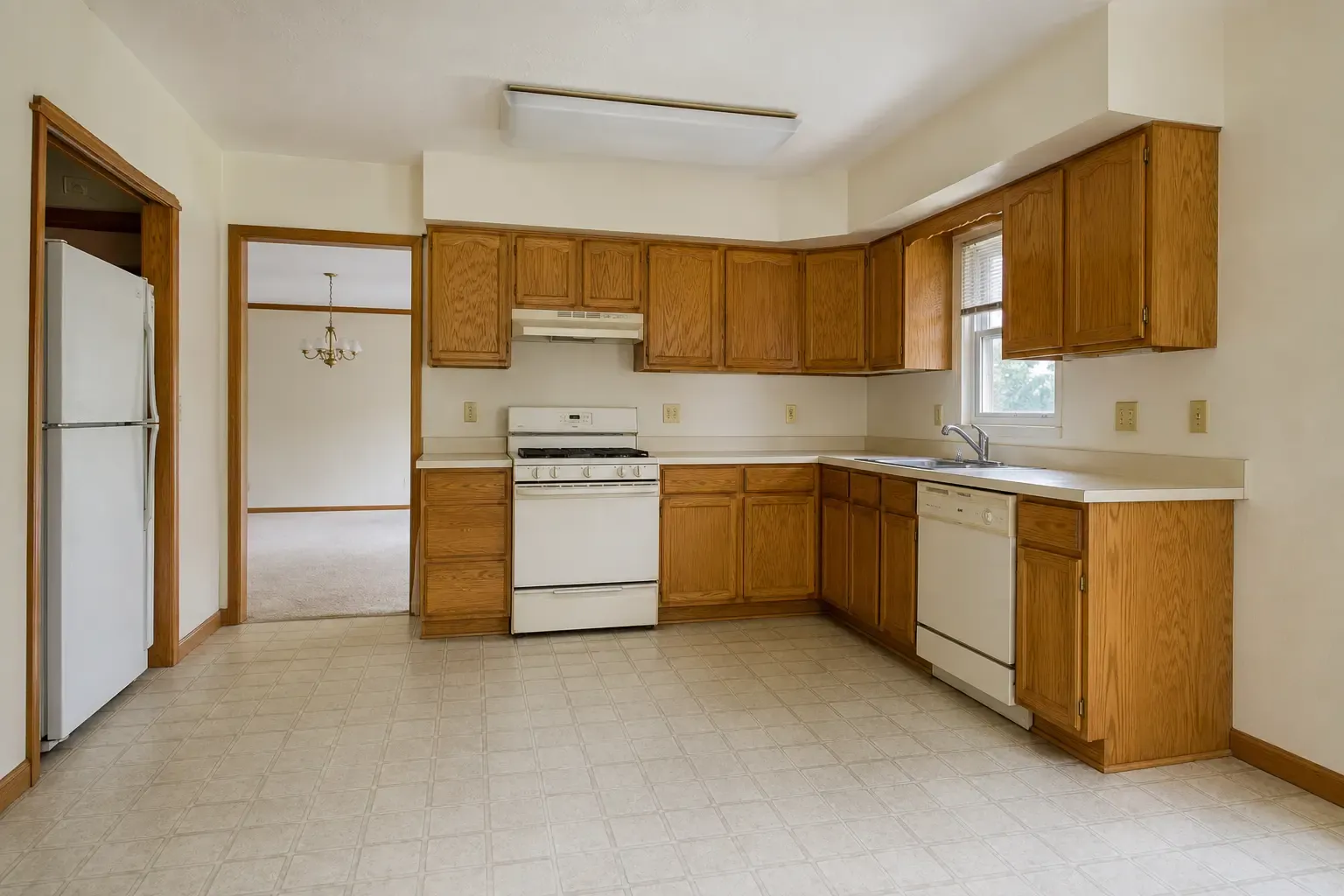 CabinetsFlooring
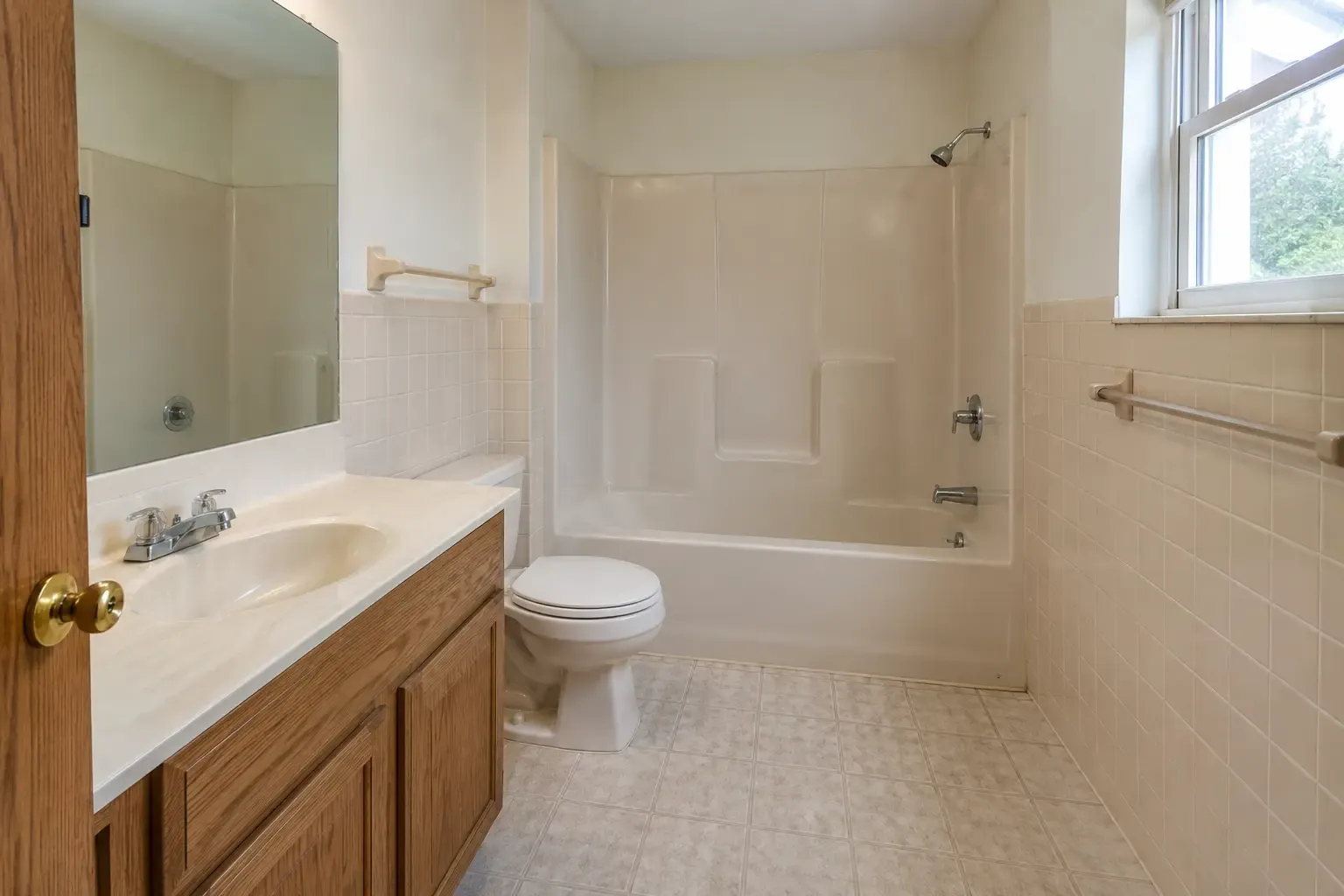 Tub & tile
 Floors
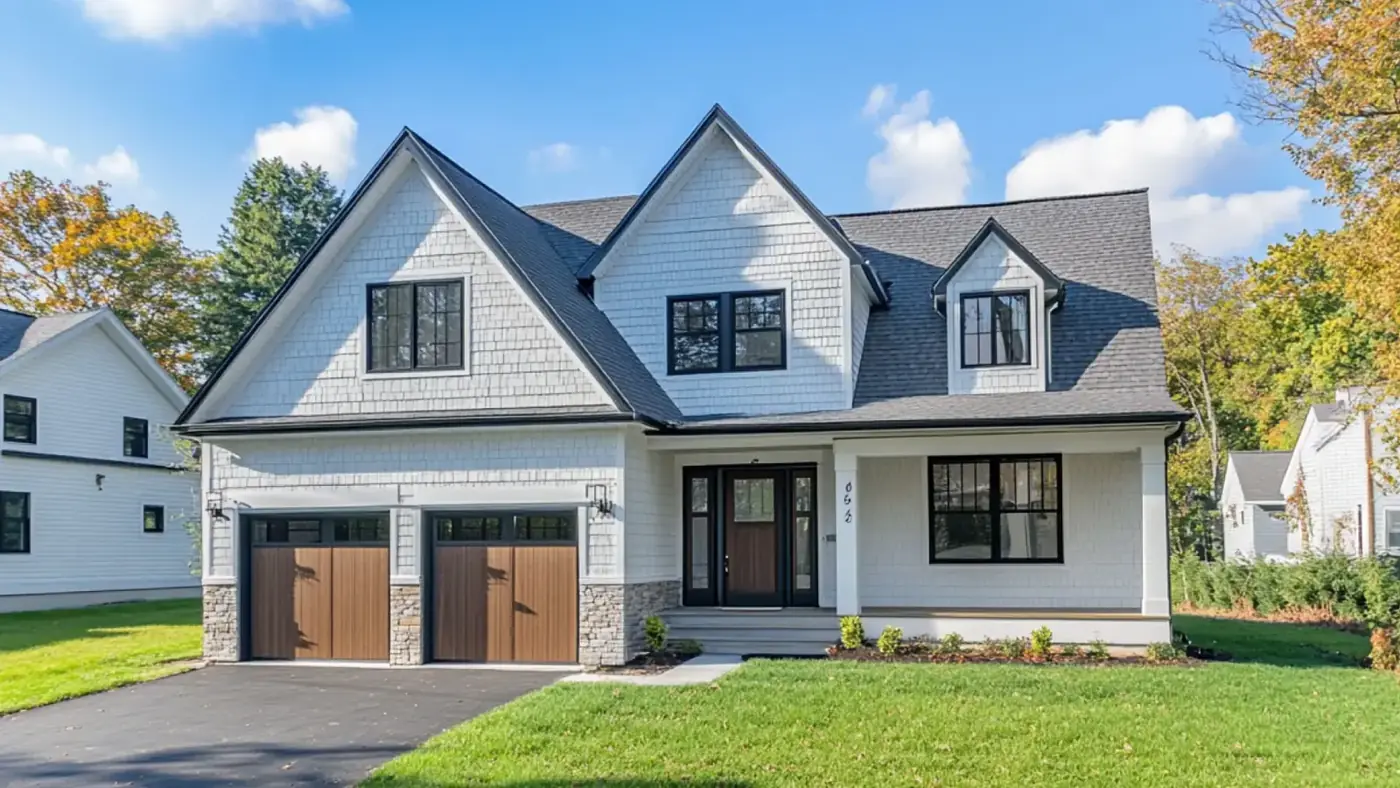 Roof
We may bring in a partner buyer to close. Your price and terms don't change.
Questions about lease options and rent-to-own
What is a lease option in real estate?
A lease option is a lease combined with an option to buy. The tenant rents the house for a set term and has the right, but not the obligation, to buy it at a price agreed at the start. The owner keeps title until the option is exercised and the sale closes.
Is rent-to-own the same as a lease option?
Usually, yes. “Rent-to-own” is the everyday name for a lease with an option to buy. Some rent-to-own deals are lease purchases instead, where the tenant is obligated to buy. Read the agreement to see which one you have.
What is the difference between a lease option and a lease purchase?
In a lease option, the tenant may buy but doesn’t have to. In a lease purchase, the tenant agrees to buy at the end of the lease. Either way, the owner must sell on the agreed terms if the buyer performs.
Who pays the mortgage during a lease option?
The owner. The mortgage stays in the owner’s name until the sale closes. The rent is often set to cover the payment, but late payments hurt the owner’s credit, not the tenant’s.
Does the seller keep the option fee if the tenant doesn’t buy?
Usually, if the agreement says so. The option fee pays for the right to buy, so it is commonly kept by the owner if the option expires unused. Make sure your agreement says exactly what happens to it.
Can my lender call my loan if I do a lease option?
It can. Federal law protects leases of three years or less without an option to purchase from due-on-sale clauses (12 U.S.C. 1701j-3(d)(4)). A lease with an option is outside that protection. Read your mortgage with your attorney before you sign.
Does a lease option have to be recorded in Connecticut?
To bind anyone other than the two parties, a Connecticut lease of more than a year, or one with an option to purchase, must be recorded, or a notice of lease must be (CGS 47-19). As a seller, ask for a signed release to be held in escrow in case the option expires.
Do I need to give a condition report for a lease option in Connecticut?
Yes, in most cases. Connecticut requires a written residential condition report before a prospective buyer signs an option or a lease containing a purchase option (CGS 20-327b). Some transfers, such as those by executors, are exempt.
How long does a lease option last?
As long as the parties agree. There is no fixed term in Connecticut law. The longer the term, the longer your equity is tied up and your price is frozen, so think about where prices might go before agreeing to years.
Can We Buy Houses In Connecticut, LLC sublease my house to someone else?
Only if your agreement allows it. When we do a lease option, we may sublease to a family who hopes to buy. Your agreement should give you approval rights, a copy of the sublease, and a rule that the sublease ends when your lease ends.
Is a lease option a good idea if I’m behind on my mortgage?
Usually not. A lease option leaves the loan and the arrears with you, and a Connecticut foreclosure can move faster than a lease option pays off. Look at a cash sale, a subject-to sale, or talking to your lender first.
Do I pay conveyance tax on a lease option?
The Connecticut conveyance tax applies to the deed when the house is actually sold (CGS 12-494), so it is paid at the closing after the option is exercised. Connecticut sellers normally pay it.
Related guides
- Every way we buy houses in Connecticut, side by side
- How investors buy houses: the honest guide to wholesaling
- Selling your house subject-to: how it works and the risks
- What is a novation? The fix-and-list sale, explained
- Is owner financing a good idea for the seller?
- Cash buyer vs. realtor in Connecticut
- How to check a cash home buyer in Connecticut
Want to know which route fits your house? Get your written offer, or call Jerryll at (203) 529-4712.
Sources
- CGS § 47-19 (leases for more than one year or with an option to purchase; notice of lease).
- CGS §§ 20-327b and 20-327c (residential condition reports, including leases with an option to buy).
- CGS chapter 830 (rights and responsibilities of landlord and tenant, including §§ 47a-1, 47a-2, 47a-4, 47a-6a, 47a-7, 47a-16, 47a-20e).
- CGS § 47a-21 (security deposits).
- CGS chapter 832 (summary process, including § 47a-23 notice to quit).
- CGS chapter 846 (mortgages and foreclosure, including § 49-31p tenant protections).
- CGS §§ 20-329aaa to 20-329hhh (real estate wholesalers; P.A. 25-168, effective July 1, 2026).
- Connecticut Department of Consumer Protection: Real Estate Wholesaling.
- CGS § 12-494 (real estate conveyance tax).
- Connecticut Office of Legislative Research, report 2023-R-0213 (foreclosure notice to tenants; lease-purchase agreements).
- 12 U.S.C. § 1701j-3 (due-on-sale clauses, Garn–St Germain Act).
- 26 U.S.C. § 121 (exclusion of gain from sale of a principal residence).
- IRS Publication 523, Selling Your Home.
- EPA: lead-based paint disclosure for sales and leases of pre-1978 homes.
Who wrote this
Jerryll Noorden
Jerryll has bought and sold Connecticut houses since 2016 and has sat at more closing tables than he can count, on both sides. Before real estate he was a robotics scientist at NASA, IHMC and IIT. He wrote this guide because the national sites that rank for it skip the Connecticut rules that cost sellers money. When listing or selling it yourself would get you more than a cash offer, he says so.
This guide explains Connecticut rules in plain English. It is not legal or tax advice. Laws change; for your sale, talk to a Connecticut real estate attorney and a tax professional.
