
Key facts at a glance
This page is one chapter of our guide to how to sell a house in Connecticut. It answers one question: can you sell a Connecticut house without a stream of showings, and what will a buyer still need to see? We use Marlborough as the worked example; the rules apply statewide.
| Fact | Number | Source |
|---|---|---|
| Marlborough single-family market sales recorded Oct 2022 to Sep 2025 | 102 sales, median $433,500 | data.ct.gov Real Estate Sales (our query; recent years look incompletely reported) |
| Marlborough mill rate, fiscal 2026 | 37.74 mills (about $954 a month on the median) | OPM mill rates (data.ct.gov); tax on 70% assessment (CGS 12-62a) |
| Disclosure report due before the buyer signs | Or a $500 credit at closing | CGS 20-327b, 20-327c |
| Tenant access for showings | Tenant may not unreasonably refuse; reasonable notice required | CGS 47a-16 |
| New public marketing rule for listing agents | In force since Oct 1, 2026; opting out takes a signed state form | Public Act 26-23, Sec. 32 |
| Buyer’s window to test for lead paint (pre-1978 homes) | 10 days, unless waived | EPA/HUD lead disclosure rule |
| Conveyance tax on a sale under $800,000 | 1% (0.75% state + 0.25% town) | CGS 12-494 |
Why do showings feel impossible right now, and is this page for you?
Showings feel impossible when the house is not just a house: when someone in it is sick, elderly or grieving, when a tenant lives there, when work or kids leave no time to keep it spotless, or when you simply do not want strangers opening your closets. This page is for Connecticut owners who need to sell an occupied home with as few visits as possible, and want to know what is realistic.
Maybe your father is in a hospital bed in the living room of the cape off Route 66, and the idea of buyers walking past him is unthinkable. Maybe you have a tenant who pays on time and does not want to be disturbed. Maybe you are recovering from surgery, or caring for someone who is, and keeping the house “show-ready” for six weeks is not going to happen. Most people in this spot feel protective, exposed, exhausted and a bit guilty for wanting privacy at all.
You do not need to feel guilty. Wanting fewer strangers in your home is a normal reason to choose a different way to sell, and Connecticut law does not require any particular number of showings. What it does require is honest disclosure, and that every buyer gets a fair look before they commit. Between those two lines, there is a lot of room.
I am Jerryll Noorden. I have bought houses in Connecticut since 2016, about ten a year, most of them with one visit. I will also tell you where fewer showings cost you money, because they usually do.
Can you sell a house in Connecticut without showings?
Yes, you can sell a house in Connecticut without the usual showings, either by selling directly to a cash buyer after one walk-through, or by listing with strict limits such as a virtual tour first and in-person visits only for serious, pre-approved buyers. What you cannot do is sell with no one ever seeing the inside: almost every buyer, inspector or appraiser will need at least one visit.
No Connecticut statute sets how many showings a seller must allow. You can set showing hours, require pre-approval letters, or refuse open houses. The trade-off is buyer interest. Connecticut’s new seller opt-out form, written into law in 2026, says it plainly: the seller acknowledges that “limiting or restricting access to the property, including showings or tours, may further reduce buyer interest” (Public Act 26-23, Sec. 32). That is the honest cost of privacy on the open market.
So the real question is not “showings or no showings” but “how few visits can my sale work with, and what will that cost?” The privacy ladder below answers it.
What will a buyer still need to see, even with no showings?
Even with no showings, a buyer will still need to see the inside of the house at least once, and a buyer using a mortgage will usually also send a home inspector and the lender’s appraiser, and do a final walk-through before closing. A cash buyer typically needs one walk-through of about an hour, no appraiser, and often no separate inspection.
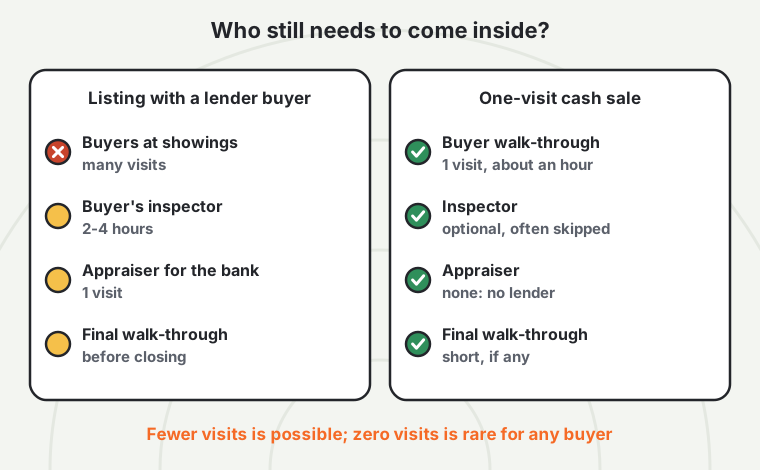
Paperwork can replace some visits, not all of them. Before a buyer signs, you give them the Property Condition Disclosure Report (CGS 20-327b), which asks about the roof, basement water, heating, the oil tank, the septic or well, radon, lead paint and more. A buyer who has a thorough report, good photos, a floor plan and a video tour can decide whether the house is right before ever coming over. That is how you cut ten visits down to one or two.
For houses built before 1978, the federal lead paint rule also gives the buyer a 10-day chance to test for lead unless they waive it. A cash buyer buying as-is often waives it; a family with young children may not. Our guide to the Connecticut property condition disclosure goes through the report line by line.
How do virtual tours, showing windows and one-visit sales work?
Virtual tours, showing windows and one-visit sales are steps on a privacy ladder: an open listing gets the most buyers and the most visits; showing windows of a few set hours a week cut the disruption; a video or 3D tour first lets only serious buyers come in person; a private sale to one buyer cuts visits further; and a one-visit cash sale needs a single walk-through. Each step down usually means fewer offers and a lower price.
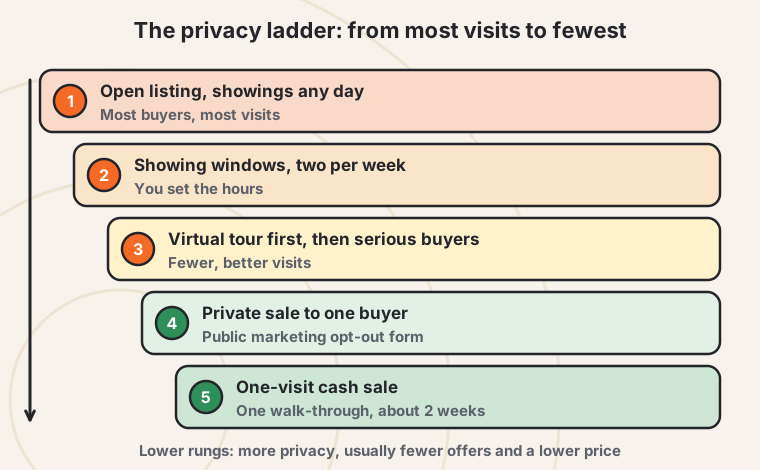
| Option | Visits | What it costs you |
|---|---|---|
| Open listing, showings any day | Many | Commission; your time and privacy; the widest pool of buyers |
| Showing windows (for example two blocks a week) | Fewer, grouped | Some buyers cannot make the windows |
| Virtual or 3D tour first, in person only with a pre-approval letter | A handful | Tour cost; casual buyers drop off (often a good thing) |
| Private or office-exclusive sale through an agent | One or two buyers | Signed opt-out form; fewer offers, likely lower price |
| One-visit sale to a cash buyer | One walk-through | A lower price than a retail sale; no commission |
A private sale through an agent is not the same as a direct sale. Since October 1, 2026, a Connecticut listing agent who markets your house publicly in any way, including social media, a yard sign or a group email, must also make it available on a public listing platform at the same time, unless you sign the state’s opt-out form (Public Act 26-23, Sec. 32). Our guide to selling a house off-market explains that law and the national MLS rules in full.
One more option some sellers ask about: a single open house instead of many showings. It concentrates the disruption into one afternoon, but it also brings the most strangers at once, and it is the least private rung of all.
How do you sell a house in Connecticut with a tenant living in it?
You sell a house in Connecticut with a tenant living in it by giving the tenant reasonable notice before each visit and coming at reasonable times; under CGS 47a-16, a tenant may not unreasonably refuse entry to show the unit to buyers. To keep visits to a minimum, sell with the lease in place to a buyer who wants the rental, or plan one walk-through with the tenant’s cooperation.
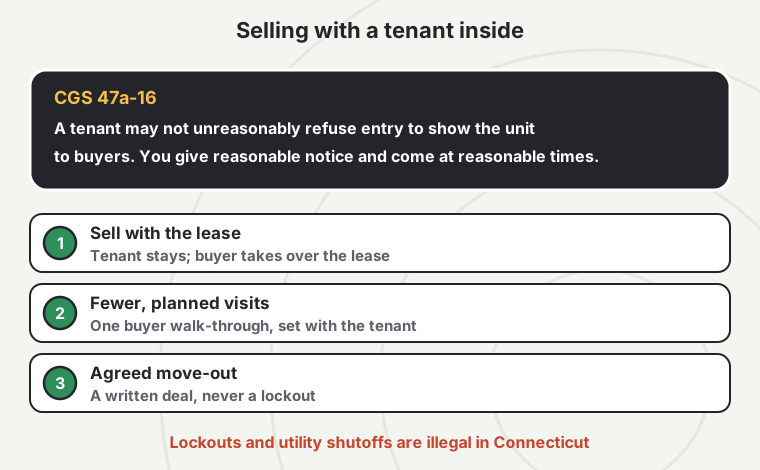
The statute does not set a fixed number of hours of notice; it says reasonable notice, written or oral, and no abuse of the right of entry. In practice, a respectful plan with the tenant (one or two scheduled visits, with a thank-you) works far better than a string of showings. A tenant who is harassed or worried about losing their home can make every visit hard.
If you want the house empty, that is a separate legal process with its own timeline, and lockouts and utility shutoffs are never allowed. Our guide to selling a rental with tenants in Connecticut owns this topic, and our page on selling a rental property with tenants explains how a sale with the tenant in place works.
What if the owner is elderly, ill or not able to manage the sale?
If the owner is elderly, ill or not able to manage the sale, the sale can still be private and low-contact, but the right person has to sign: the owner, an agent under a valid power of attorney, or a conservator appointed by the Probate Court, who needs the court’s permission to sell real estate (CGS 45a-164). You never have to disclose anyone’s health to a buyer; the disclosure report is about the house.
For a one-visit sale, the visit can be planned around the owner’s rest and care: a single hour, one or two people, no photographs of the occupied rooms if you prefer. Many families arrange for the owner to be out with a relative during the walk-through. If the owner is moving to assisted living or family, our guide to downsizing in Connecticut covers the move itself, including what to do with a full house.
Talk to the family’s attorney early about who signs. A power of attorney must be valid and accepted by the closing attorney; a conservatorship adds a court hearing to the timeline.
What does selling with fewer showings cost?
Selling with fewer showings usually costs some price, because fewer buyers see the house and fewer offers compete; the state’s own opt-out form warns that limiting showings “may further reduce buyer interest.” On a Marlborough house at the $433,500 median, each month the sale takes costs about $954 in property tax alone at the fiscal 2026 rate, which is part of the trade-off.
Here is the honest frame. A listing with full showings gets the most offers and usually the highest price, minus commission, about 1% conveyance tax ($4,335 on $433,500), an attorney, prep and the months it takes. A one-visit cash sale skips commission, prep and most of the waiting, but the price is lower, because the buyer takes on repairs, risk and resale costs; our page on why cash offers are lower shows the math. The middle rungs sit in between.
To compare your own numbers, use the calculator below, and read our page on cash buyer vs. realtor in Connecticut for the full side-by-side.
How much would you walk away with?
Slide the numbers to match your house. It works in your browser; nothing is saved or sent.
Estimates for planning. Conveyance tax per CGS 12-494 (state 0.75% up to $800,000, 1.25% to $2.5M, 2.25% above, plus the town rate). Seller attorney about $1,200 to $1,500; flat-fee MLS about $400; listings include three months of taxes, insurance and utilities, a cash sale about two weeks. Your attorney gives you the final numbers.
When you should not avoid showings
If the house is in good shape, nobody’s health or tenancy makes visits hard, and you can live with a few weeks of disruption, do not skip showings, and do not sell to a cash buyer just to avoid them. Use showing windows and a good video tour instead. Privacy is worth paying for when it protects someone; otherwise, the buyers who come through the door are the ones who pay the most. For every other route, see our pillar on how to sell a house in Connecticut.
How do you sell a house with one visit, step by step?
To sell a Connecticut house with one visit, send photos or a video and the basics first, get a ballpark from a cash buyer, schedule a single walk-through at a time that works for everyone in the house, get a written offer with no deadline, and let the attorneys close on your date, usually about two weeks later.
Share photos first
Send a few phone photos or a short video, plus the age of the roof and heating system if you know it. Nobody has to come over yet.
Get a ballpark
A ballpark range tells you whether this route is worth a visit at all. It commits you to nothing.
Plan one walk-through
Pick a time that suits the owner, the tenant or the caregiver. One or two people, about an hour.
Get a written offer
The offer should have no fees and no expiration pressure. Compare it with what a listing would net.
Close with attorneys
Your attorney and ours handle the deed, payoff and closing papers. You pick the date, and you leave behind anything you do not want.
Get your cash offer
without anyone coming over.
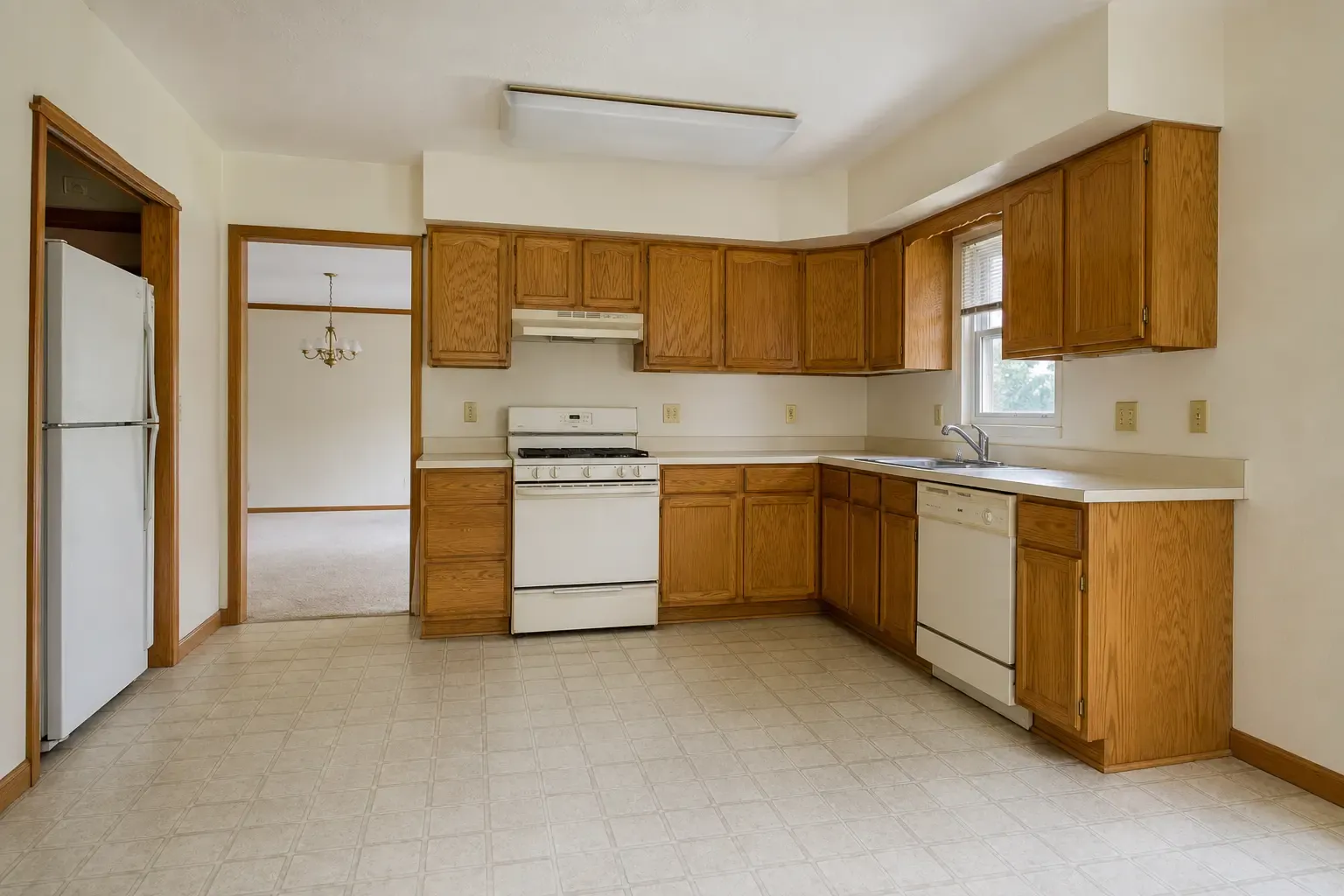
Want your offer faster, or rather not talk to anyone yet? Send a few phone photos of each room. We price the repairs from them, line by line, and send your cash offer back, so you see a real number before you ever meet us or pick up the phone.
 CabinetsFlooring
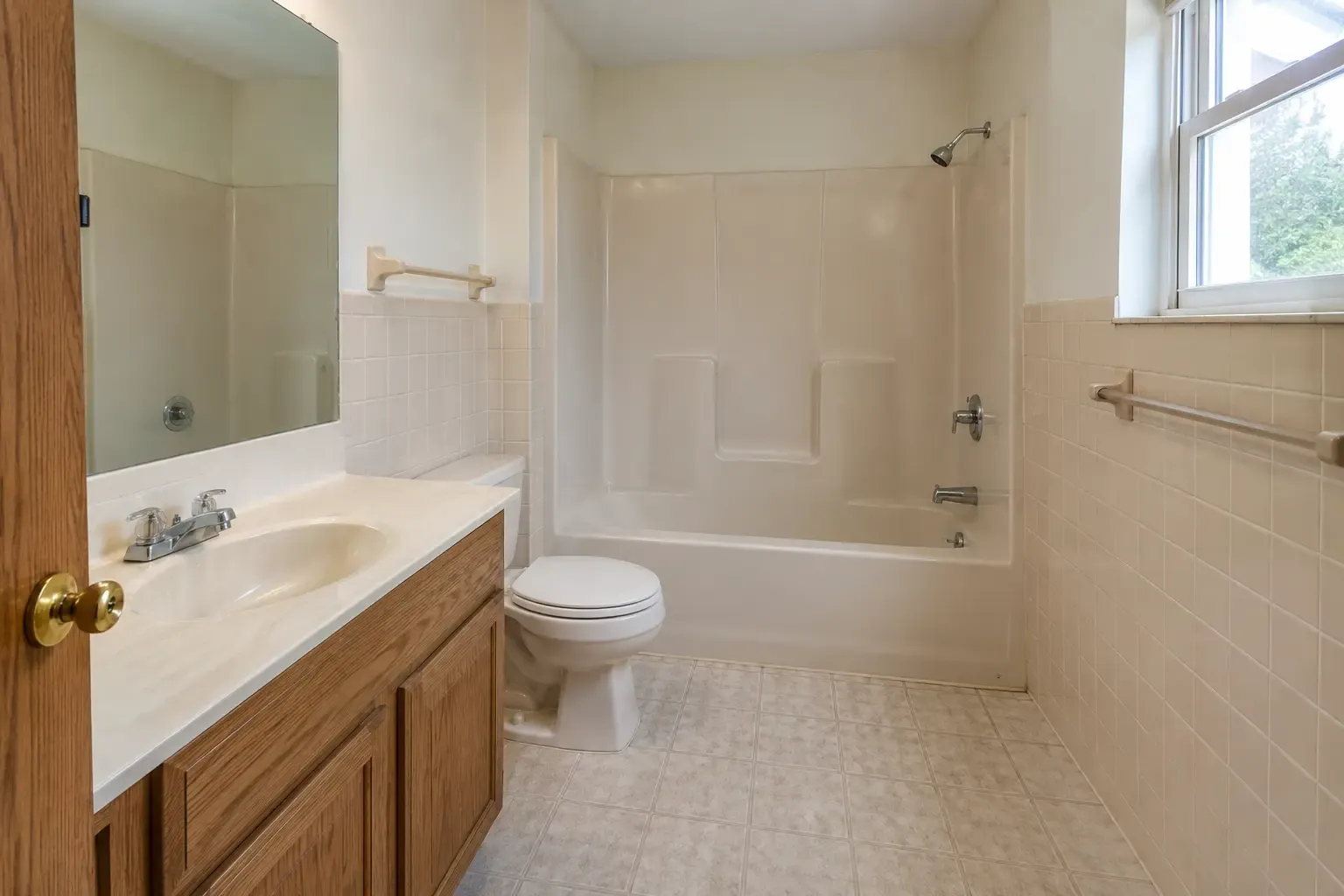 Tub & tile
 Floors
 Roof
We may bring in a partner buyer to close. Your price and terms don't change.

When someone in the house is ill, I ask the family to tell me the one hour of the day that is least disruptive, and that is when I come. I look at the roof, the basement, the heating system and the kitchen and bathrooms. I do not need to open drawers, and I do not need anyone to clean.
Questions Connecticut sellers ask about selling without showings
Can I sell my house in Connecticut without any showings?
You can sell a house in Connecticut with almost no showings by selling to a cash buyer after a single walk-through, or by listing with strict limits on visits. A sale with no visit at all is rare, because almost every buyer, inspector or appraiser needs to see the inside once.
Do I have to allow showings if I list with an agent?
No, you do not have to allow unlimited showings if you list with an agent in Connecticut; you can set showing hours, require pre-approval letters and refuse open houses. Expect fewer offers: the state’s opt-out form says limiting showings may reduce buyer interest (Public Act 26-23).
Can a tenant refuse showings in Connecticut?
A tenant in Connecticut may not unreasonably refuse a landlord’s entry to show the unit to buyers, as long as the landlord gives reasonable notice and comes at reasonable times (CGS 47a-16). A tenant can object to visits that are unreasonable or used to harass.
Will a buyer buy a house sight unseen in Connecticut?
Very few buyers buy a Connecticut house sight unseen. Even buyers who decide from a video tour usually walk through once before closing, and a lender’s appraiser normally visits. A cash buyer can often decide from photos and one short visit.
Do I have to tell buyers someone in the house is sick?
No, you do not have to tell buyers about anyone’s health. The Connecticut disclosure report (CGS 20-327b) asks about the condition of the house, such as the roof, water, heating, septic and radon, not about the people who live there.
Who signs if my parent cannot manage the sale?
If your parent cannot manage the sale, it can be signed by an agent under a valid power of attorney, or by a conservator appointed by the Probate Court, who needs the court’s approval to sell real estate (CGS 45a-164). Talk to an attorney before you list.
Are virtual tours enough to sell a house?
Virtual tours are usually enough to decide whether to visit, not to replace the visit. A good video or 3D tour cuts the number of in-person showings sharply, because only buyers who already like the house come in.
How many times does a cash buyer need to see the house?
A cash buyer usually needs to see the house once, for about an hour, to check the roof, basement, heating, kitchen and bathrooms. There is no lender appraiser, and the final walk-through, if any, is short.
Does selling without showings lower the price?
Selling without showings usually lowers the price, because fewer buyers compete for the house. The size of the gap depends on the house, the season and the route; compare a listing net with a written cash offer before you decide.
Related Connecticut guides
Privacy and hassle
Start with the big picture in how to sell a house in Connecticut. We buy houses in Marlborough and every other Connecticut town; see where we buy houses in Connecticut, or our page for nearby Glastonbury.
Plain-English information, not legal advice. Examples are illustrative and built from public numbers; amounts marked (est.) are estimates.
Sources (checked on October 27, 2026)
- Office of Policy and Management, Real Estate Sales dataset (data.ct.gov; Marlborough single-family market sales recorded October 2022 to September 2025, queried October 27, 2026).
- Office of Policy and Management, mill rates by town (data.ct.gov; Marlborough fiscal 2026).
- Public Act 26-23, Sec. 32 (public marketing of residential listings and the seller opt-out form, effective October 1, 2026).
- CGS § 20-327b and 20-327c (Property Condition Disclosure Report; $500 credit).
- CGS § 47a-16 (landlord entry to show a rented unit).
- CGS § 45a-164 (Probate Court authorization to sell a conserved person’s real property).
- CGS § 12-62a (assessment at 70% of value).
- CGS § 12-494 (conveyance tax).
- EPA, lead-based paint disclosure for home sales (10-day inspection opportunity).

Who wrote this
Jerryll Noorden
Jerryll has bought and sold Connecticut houses since 2016 and has sat at more closing tables than he can count, on both sides. Before real estate he was a robotics scientist at NASA, IHMC and IIT. He wrote this guide because the national sites that rank for it skip the Connecticut rules that cost sellers money. When listing or selling it yourself would get you more than a cash offer, he says so.
This guide explains Connecticut rules in plain English. It is not legal or tax advice. Laws change; for your sale, talk to a Connecticut real estate attorney and a tax professional.
